|
|
||||
|---|---|---|---|---|
| Volume 56 Number 32, October 31, 2026 | ARCHIVE | HOME | JBCENTRE | SUBSCRIBE |
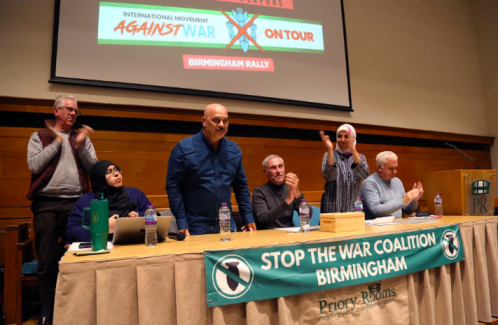
Stop the War Coalition reports that the opening night of the national anti-war tour took place on October 22 in Birmingham. More than 150 people packed the hall. French MP Jérôme Legavre spoke of students having to rely of food banks while billions is spent on the military and war, and docker Giorgos Gogos told of the dockers' strikes and action taking place against arms shipments to Israel.
"The international movement against war and for Palestine was brought to the heart of the country's second city. The power and emotion of the night will sharpen the local movement's focus," commented one local activist in attendance.
Jérôme Legavre was in London on October 23, joined by leading British activists, with Greek docker Giorgos Gogos and Peter Mertens, Belgium member of parliament for the Workers' Party.
The international movement headed to Bristol on October 24, followed by Brighton, Liverpool, Newcastle and Glasgow during the past week. Each rally hosted international speakers, including eyewitnesses from the strikes and protests erupting across the continent.
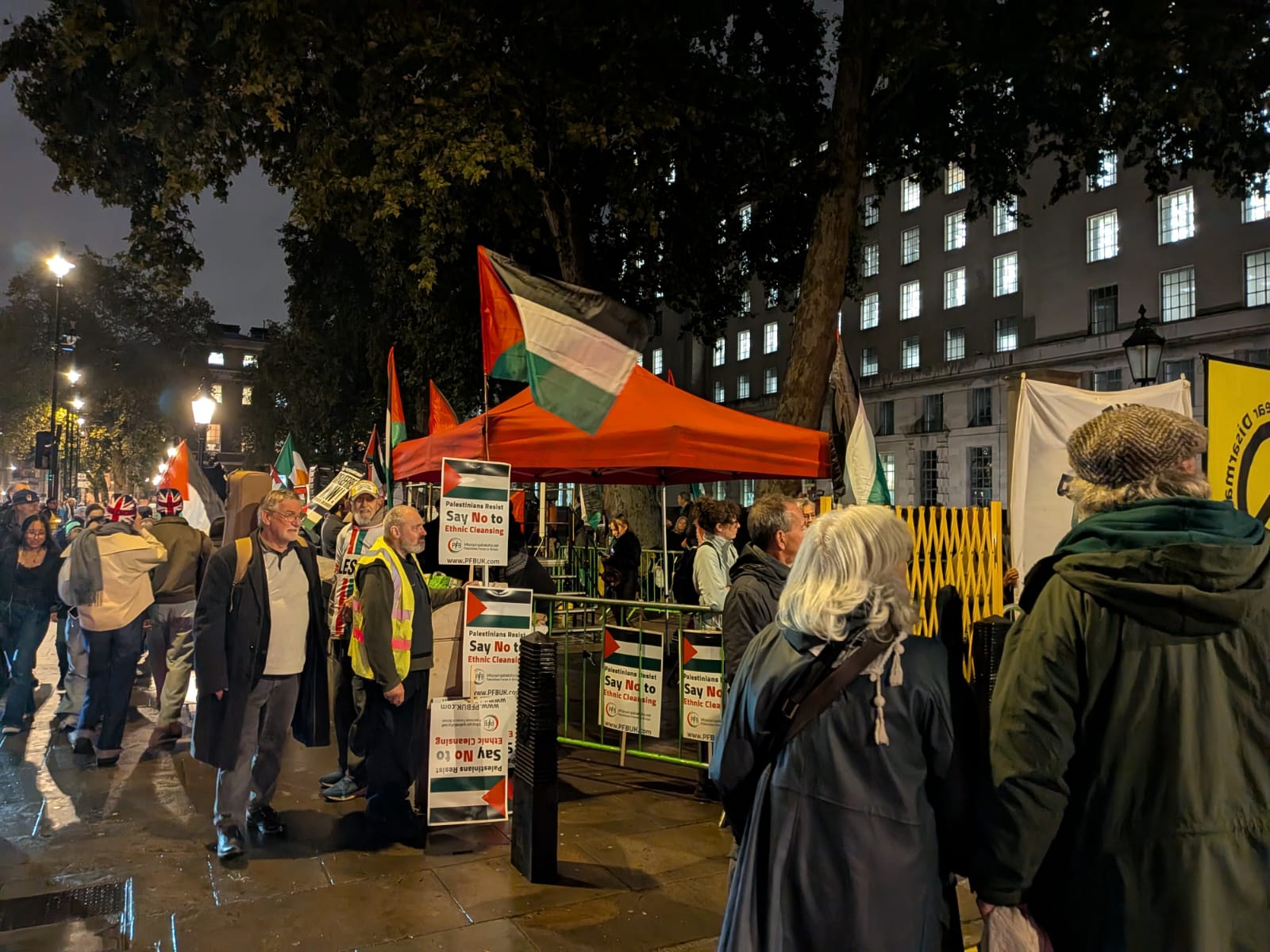
As Defence Secretary Wes Streeting deploys British fighter jets to Saudi Arabia to assist with its war on Yemen, and mass protests spread across Europe demanding an end to cuts and militarism, an emergency demonstration, "Hands Off the West Bank! End Apartheid!" was held in Whitehall, opposite Downing Street, on October 26, in support of Palestine against the continued genocide being perpetrated by the US/Israel with British complicity. Slogans included: "No to occupation. No to apartheid. No to the forced displacement of Palestinians."
Students and youth say no to war, militarism and conscription: Friday, November 20
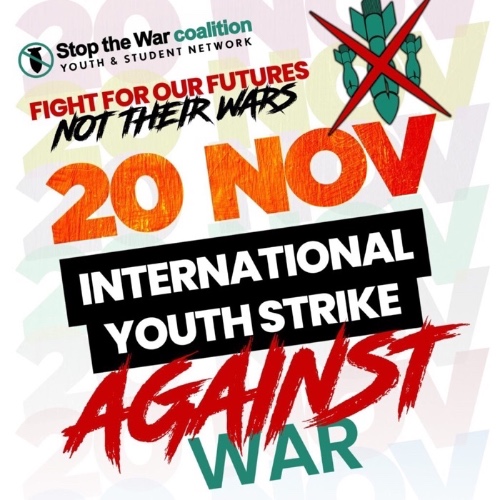
Stop the War Coalition reports in its newsletter: "As we heard in John Healey's budget statement it's a budget for war and austerity and war preparations are continuing apace. So it's all the more important that our international days of action are widely supported."
The international student and youth strike is taking place on November 20. Stop the War writes: "Thousands of students across the UK and internationally will walk out of their schools, colleges and universities against the drive to war, the militarisation of education and the austerity that comes with it.
"In London there will be a rally in Trafalgar Square where students from across the capital will come together at 1pm following uni and college walk-outs. In Manchester students from Manchester Met and Manchester Uni will be meeting at Whitworth Arch at midday. In Sheffield there's walk-outs at both Sheffield Uni and Sheffield Hallam followed by a rally outside the Town Hall at 1pm, and there are walk-outs and rallies in Brighton and Glasgow.
"Then on Saturday, November 21, we will see protests and activities around the country. In London there will be a protest outside Downing Street at midday. A peace conference is being held in Preston. In Manchester StW is supporting the Lucas Plan 50 years anniversary conference. Other protests and actions are taking place in Liverpool, Brighton, Bristol, Cardiff, Newcastle, Birmingham, Glasgow - details to be announced.
Over 100 ports say no to arms and genocide
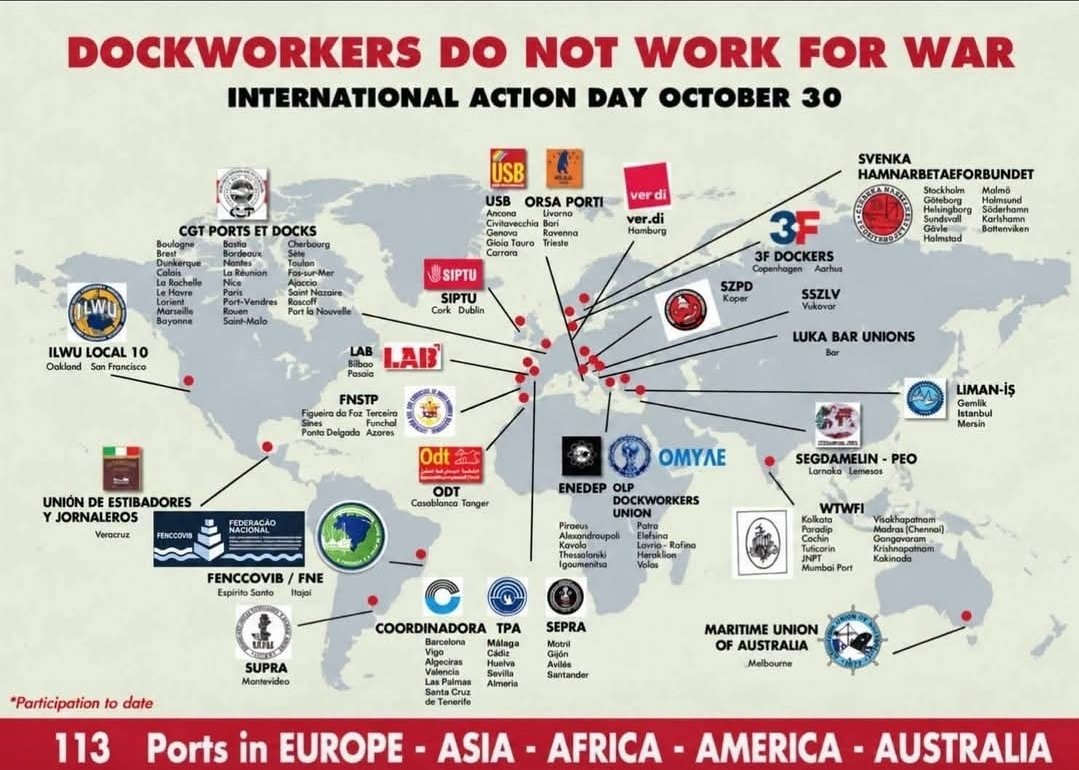
October 30 saw the largest co-ordinated action against war by dockworkers in 113 ports across 22 countries. Actions included 24 hour strikes at ports in France, Italy, Greece and Türkiye; stoppages in Morocco, Cyprus and elsewhere as well as rallies at port gates. In France, the main dockers' union said the country's ports will be 95% shut.
The action was five times larger than the strikes in February, spreading to ports across the world - India, Australia, US, Brazil, Uruguay and Mexico as well as numerous Mediterranean ports. In the Mediterranean the strikes delayed over $2.8 bn worth of cargo costing around $57 million.
National Anti-War Tour Meeting in Newcastle
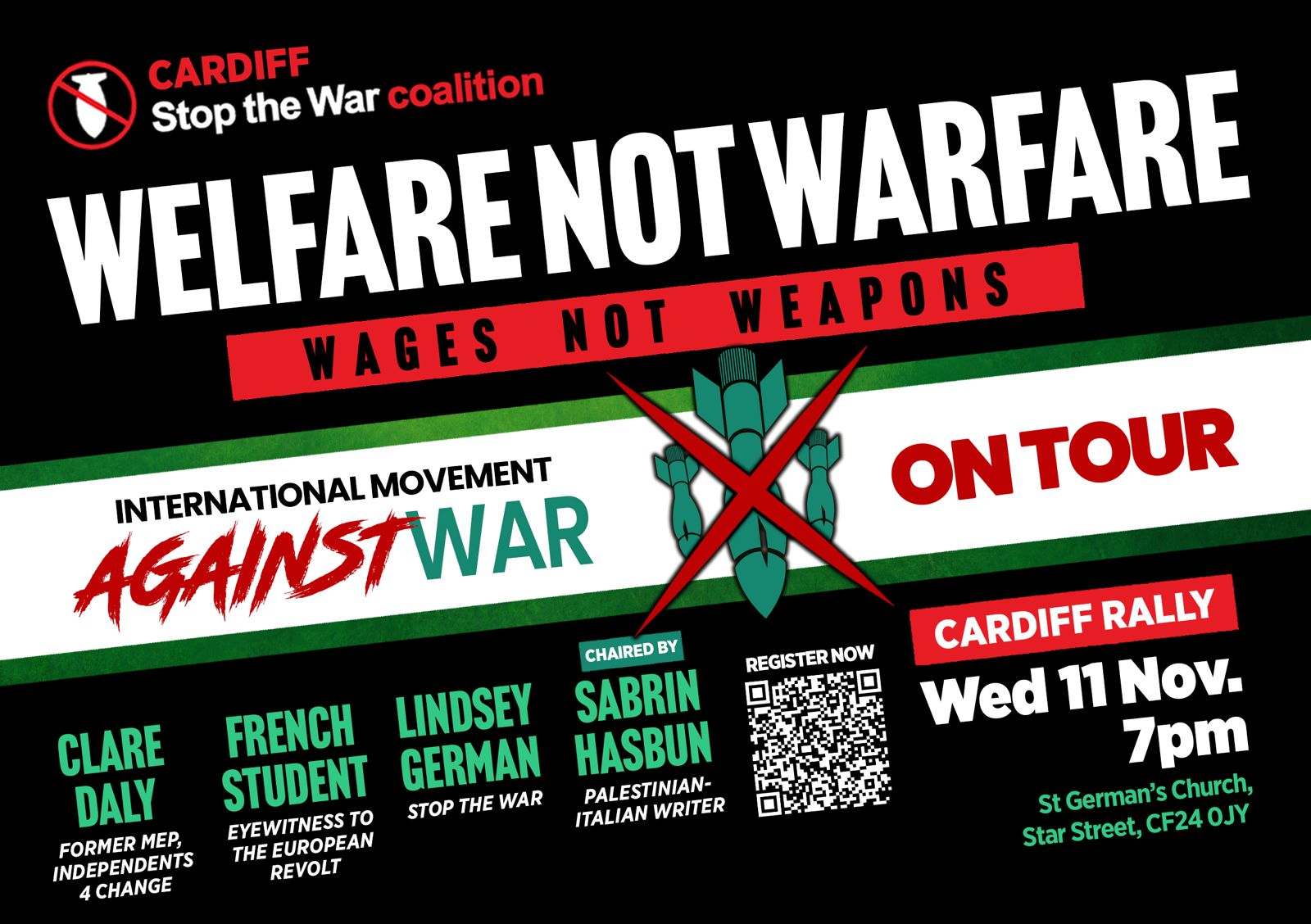
Following the phenomenal success of the International Anti-War Conference in June, Stop the War has organised a national anti-war tour. On October 28, another successful meeting took place in Newcastle at the Mining Institute, Common Room. Speakers at the meeting were Ulrike Eifler German Trade Unions Against War, Andrew Feinstein author and activist, Fran Heathcote General Secretary of the PCS union, Sophie Johnson Scottish Stop the War, Lindsey German Stop the War and Marine, a French student, eyewitness to resistance of the schools students in France as part of the mass European resistance of the youth to austerity, conscription, rearmament and militarism.
Opening the meeting, the Chair, Tony Dowling of Newcastle Stop the War, said that this meeting was part of a tour organised by the Stop the War Coalition following the second international anti-war conference where 3,000 people including trade unions took part from all over Europe. Referring to the emergency protest outside Parliament for Palestine on October 26, he said that Alex Kenny, Chair of Stop the War, condemned Wes Streeting's warmongering statement that "we have a thousand days to prepare for war" and said that "we are here as we are tonight to talk about a war that our government is complicit in, the war on the Palestinian people, and the need to campaign against wars that are being generated across the planet."
Emergency protest for Palestine in Whitehall on October
26
Sophie Johnson condemned the hysteria coming from the government and generals directed at the working class to prepare for war saying that "we need a much bigger anti-war movement, a much more organised anti-war movement to confront that fact. And we need to have in it at the very least trade unionists who oppose putting arms in the hands of those who have spent the last 25 years laying waste to the Middle East. And we need to have much more people that are prepared to say that it is our government, not Russia, who's the source of every problem in our society."
Marine, the French student, spoke in detail by video link about the struggle of school students and University students in France who have now been joined by mass mobilisations in Spain, Serbia, Albania and Brazil, adding that "the situation in France has a distinctive feature".
Andrew Feinstein said: "We have political prisoners serving lengthy sentences for opposing the genocide despite Miliband telling us that we were right. We have huge numbers of young people currently on trial, where they're being charged with usually minor criminal damage and then sentenced as terrorists." He concluded by saying that "we have got to grow this anti-war movement like we have never done before".
Fran Heathcote said that "there is a cost of living crisis in this country at the moment. We have record numbers of families homeless. We have record numbers of children about to spend Christmas in temporary accommodation. We have near record National Health Service waiting lists and 2 million pensioners are still living in poverty. But if you listen to the many politicians and much of the media, they will tell you that the number one priority is not any of that. It's to increase defence spending. We're here tonight to say no to that agenda.
"And just in this past week, Andy Burnham has announced our armed forces will be sent to Saudi Arabia to defend that human-rights-abusing dictatorship. The people who hang people for being gay, who chop up independent journalists, and who have waged a campaign of starvation and bombing against the people of Yemen."
Lindsey German condemned NATO and its drive eastward saying: "You have to say that the continuation of the war in Ukraine is very much the motivation of the British, the French, the German, all of these governments are pouring huge amounts of resources into it. And it is also very largely to do with the expansion of NATO eastwards and what that has meant over the last 30 or 40 years."
Lindsey German continued; "Whatever the dangers facing Britain, they do not mainly come from any of this stuff or indeed from Russia or from Iran or anywhere else that they say. And when they say that, as people have referred to, prepare for war in a thousand days, why not prepare for peace in a thousand days? Why don't we spend three years trying to work out how Britain has been involved in causing such damage around the world? Maybe if they stopped arming Israel. Maybe if they stopped backing Saudi Arabia. Maybe if they stopped doing some of these things. Might be a bit more chance of peace in the Middle East."
In conclusion Lindsey suggested, "We should go to the students and try and get them to strike and walk out on November 20 in solidarity with their European counterparts ... And on November 21 we should have a day against militarism again in solidarity."
Ulrike Eifler opened by saying: "It is crucial that we understand that we are living in very significant times. These are times in which on the one hand the establishment is preparing for war. On the other hand the protest is growing. And I think it's not coincidence that Germany, a country experiencing a massive de-industrialisation, is the driving force behind war co-operation in Europe. Feeling the decline, the establishment prepares to enforce their interest through military means. Germany plans to spend 5% of its GDP on armament, five years earlier than every other NATO nation, 250 billion euros for weapons." She said that the German government is planning to "enforce the obligation to work in the rearmament industry, in the hospitals, in the energy sector in the event of war and the hospitals prepared to deny medical care to those who are not essential to the war effort. This is the new German militarism and I think we have to bring it down as soon as possible. What we can see very clearly right now wherever war is being prepared there also grows the readiness to resist."
Concluding the meeting, the Chair called on people to go back to their trade union branches and get them to affiliate to Stop the War and to the Palestine Solidarity Campaign and get motions in support of the anti-war movement and build those links and find a way to take action like they are doing in France. "So please don't just go away and say how good this was today. Go away and take some further action to build this movement in the next weeks and months ahead. So thank you very, very much again for coming."
The speeches can be listened in full, in the You Tube film of the meeting below [1]. As a new participant pointed out on social media after the meeting: "It was such a good meeting with incredible speakers... such powerful anti-war speeches and a video link to an amazingly articulate French student about the student protests. She emphasised the role of trade unions in the protests - and that theme was carried in all the speeches of the need for unions and workers to be central for any successful campaigns."
[1] https://www.youtube.com/watch?v=WFsBgSMsUqo&t=10s