
|
|
||||
|---|---|---|---|---|
| Volume 56 Number 31, October 24, 2026 | ARCHIVE | HOME | JBCENTRE | SUBSCRIBE |
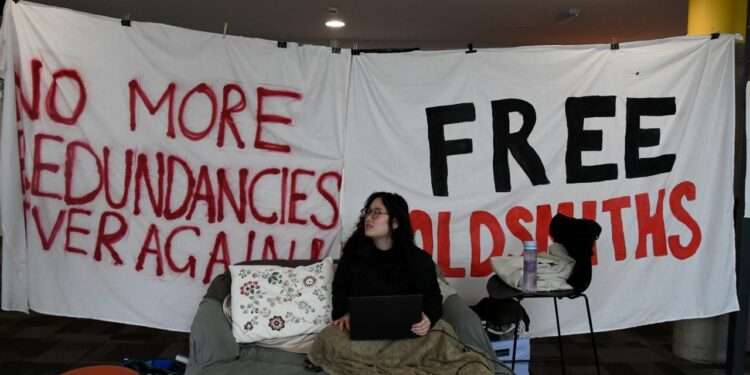
Now in their 20th week of indefinite strike action - the longest of any UCU branch as of Friday, October 23 - in opposition to the next phase of £20m in staff cuts, Goldsmiths University and College Union (GUCU) are calling for urgent fundraising support from across UCU and the wider trade union movement, in order to sustain their action [1].
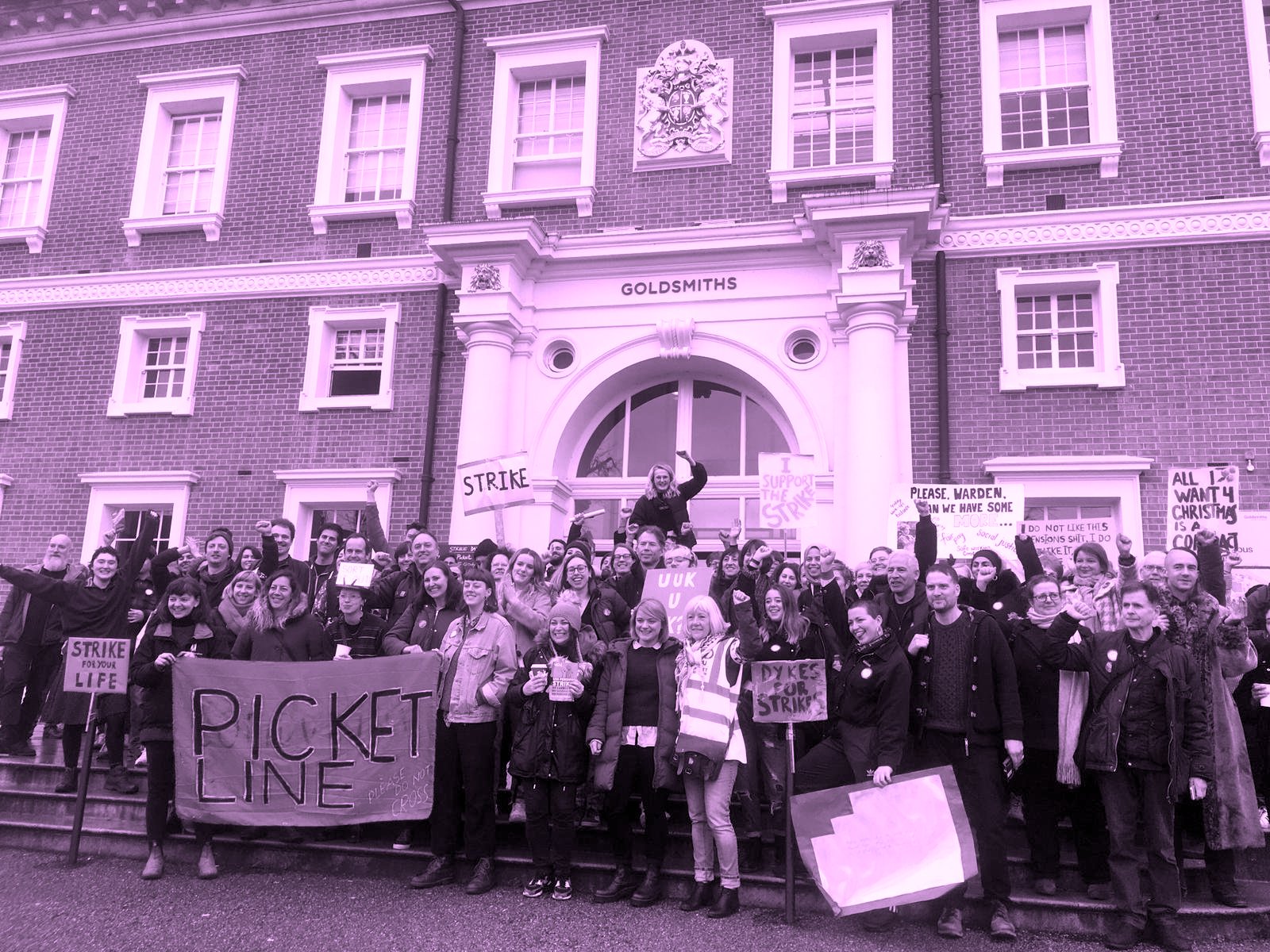
The Goldsmiths UCU's strike centres on a deep dispute over restructuring, job cuts, and the future direction of the university, under "Future Goldsmiths", the university's latest programme of redundancies and restructuring.
The dispute began in April 2026, when Goldsmiths announced the major multi-year restructuring plans, alleging that its "recovery programme" would yield £7.6m in savings, and a further "transformation programme" would result in £16.1m further savings.
The GUCU justly argues that these programmes have led to damaging cuts, including proposed academic redundancies, especially in the arts and humanities. GUCU began a marking and assessment boycott ("action short of a strike") on April 27. This is a powerful tactic which the branch had previously used as part of a successful campaign to prevent compulsory redundancies. In response to the boycott, however, senior management announced the threat of 100% pay deductions for participants - an effective lockout. GUCU, which has a history of effective militancy, then launched indefinite strike action to force management to withdraw both the threat of full pay deductions and the compulsory redundancies.
In a ballot that closed on April 10, 81% of members who voted backed strike action and 92% backed action short of a strike, on a turnout of 63%. Indefinite full strike action has taken place from June 8 in response to the threat of sweeping compulsory redundancies, increased workload, erosion of job security, and the effective management lockout.
Senior management have argued that major staffing cuts are needed as part of plans to make £22m in savings by the end of the 2026-27 academic year, with £20m of those cuts coming from staffing. The proposals could put hundreds of academic and professional-services jobs at risk.
This reflects the wider funding crisis facing English universities, where not only have courses and lectureships come under attack, especially in the humanities, but the trend has become that of integrating universities into the government's and war industries' so-called war-readiness. At Goldsmiths, GUCU has also pointed out that huge sums have been spent on consultants, recruitment services and senior-management salaries. Goldsmiths has an internationally recognised history of creativity, including in art and music, and the arts and humanities are central to its identity. However, it is now in danger of entering a death spiral of repeated cuts, declining provision and falling student confidence, as the union points out.
Despite the impact on students, particularly fine art students, of the action, for which the university must be held accountable, there has also been strong support from the student body. For example, students carried out a 32-day occupation of the library to protest against proposed staff cuts. A 24-hour sit-in, which featured overnight shifts, community meals, and study sessions in solidarity with staff facing potential redundancy, ended after the university management threatened participants with campus bans.
On their home page, GUCU notes:
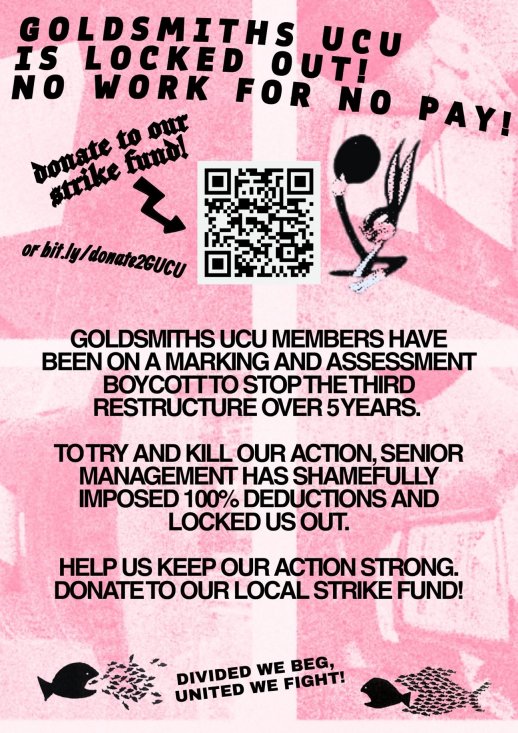
"This would be the third round of mass cuts in five years. Every previous restructure was presented as the route to financial stability. Instead, staff and students have paid the price while management has continued costly external spending and repeated restructuring. Through Freedom of Information requests, our branch uncovered more than £14 million spent on consultants between 2019 and 2026, alongside at least £6.6 million on recruitment services since 2022. Much of this followed the failed Recovery Programme, which removed internal capacity only for management to spend millions attempting to replace it.
"Our branch believes Goldsmiths cannot shrink its way out of crisis. The university needs stability, investment, and a serious focus on rebuilding student confidence and recruitment, not another round of cuts that undermines its future." [2]
Goldsmiths earlier this month has said that it has made three concessions, all rejected by GUCU, since they do not offer a solution to the crisis. The concessions included: a moratorium on compulsory redundancies until New Year, a voluntary severance scheme, and staggered salary reductions for striking staff. The union points out that the offers do not adequately protect jobs or reverse harmful restructuring. Goldsmiths have said that their three concessions of October 7 are "the strongest package the institution can responsibly offer". In its first official update in several weeks, the university said that it cannot make further concessions, but its "door is always open" to talks.
The university's argument that cuts are unavoidable is unacceptable, and there cannot be compromise on the attacks on Goldsmiths as a major arts institution, which is part and parcel of its identity. The management's proposals do not address the real issues, as the GUCU points out, and can be seen as wanton hooliganism. In fact, the lecturers point out that the university is for self-serving reasons misrepresenting and minimising the scale of the disruption caused by the union's actions, especially in fine art and humanities. In fact, it is reported that more student groups than ever are publicly supporting the GUCU and are demanding that Goldsmiths negotiate seriously. The students' frustration is exacerbated by the fact that they are being asked to pay full fees despite the disruption to their courses.
As the GUCU points out, the ongoing restructuring is leading to unsustainable workloads, erosion of research time, increased casualisation, and loss of specialist staff. The GUCU puts forward that what is needed is a workload model that is transparent, negotiated, and enforceable, protection of research time, and reduction of casual contracts. The union explains that their demands are not made out of self-interest to the detriment of students. On the contrary, they are involved in a student-centred strike, and to this end require adequate staffing to ensure teaching quality, proper workshop access and studio support, especially in Fine Art, restoration of marking and feedback capacity, and a halt to cuts that reduce student choice and academic depth. The short-term concessions offered by the Goldsmiths are not structural solutions to the crisis.
In summary, the struggle of the union and its members at Goldsmiths is a significant one in the overall struggle for the future of education, and against the wrecking of higher and further education by the authorities. The demand that there be no compulsory redundancies arising from the "Future Goldsmiths" restructuring is a red-line. There must be a binding guarantee of no compulsory job losses.
In essence, the teaching staff are declaring that "Enough Is Enough". They must be equal participants in deciding on the future direction of Goldsmiths. Their demand that there be a joint staff-student review of academic portfolio changes and protection of the threatened departments of Fine Art, Humanities, and Social Sciences, is just and must be supported.
Unless Goldsmiths reopens negotiations with new solutions, the Goldsmiths lecturers are determined to continue their strike. Their voice must be heard and their demands acted on.
Notes
1. The threat of a 100% pay deduction places participating staff under severe
financial pressure, and GUCU has launched a fundraising appeal. To donate to
the strike fund, visit: https://goldsmithsucu.org/support-
fund
2. Goldsmiths University and College Union homepage, accessed October 23,
2026
https://goldsmithsucu.org