
|
|
||||
|---|---|---|---|---|
| Volume 56 Number 31, October 24, 2026 | ARCHIVE | HOME | JBCENTRE | SUBSCRIBE |
Workers' Weekly Internet Edition: Article Index :
Warsaw Security Forum:
Nordic-Baltic-Polish Peoples Stand for Peace And Will Reject the Anglo-US Warmongers and NATOFurther warmongering in the name of defence:
Britain Deepens Military Involvement in Saudi-Led War against Yemen with Fighter Jet DeploymentWorkers Forum:
Goldsmiths Lecturers Persist in their Long-Term Struggle

The Warsaw Security Forum (WSF) [1] took place this year between October 12-13. Held since 2014 in Warsaw, the WSF Annual Gathering claims to be one of the leading international security conferences with "over 40 governmental delegations" with also "senior EU and NATO officials, military leaders, and influential voices from business, media, academia, and civil society". Donald Tusk, Prime Minister of Poland, Volodymyr Zelenskyy, President of Ukraine, and Ed Miliband, Secretary of State for Foreign, Commonwealth and Development Affairs in the UK, were among the ministers of 21 different countries listed. General Dame Sharon Nesmith, Vice-Chief of the Defence Staff UK, was listed among the 23 military leaders, along with some 50 military and armaments and "security" companies represented at the Forum.
This year, the WSF 2026 annual report was launched in the Polish Parliament prior to the forum, with the title "Securing Europe from the Eastern Flank to the High North: Strategy of the Nordic-Baltic-Polish Group" [2]. This year's report claims that Europe's "security centre of gravity" is shifting north and east towards the Nordic, Baltic and Polish region. The Nordic-Baltic-Polish group (referred to as the NB8+) comprises nine nations: the five Nordic countries (Denmark, Finland, Iceland, Norway, and Sweden), the three Baltic states (Estonia, Latvia, and Lithuania), and Poland. "Together they occupy the longest continuous stretch of NATO and European Union territory bordering Russia and Belarus," the WSF states.
In 2024, the WSF report set its tone of: "Pushing the EU agenda forward with the Weimar Triangle" of Germany, France and Poland [3]. In 2025, the WSF theme was: "Winning the War Before the War: A Blueprint for Europe". This was not about responding to a "conflict already raging on our continent" with any plan for peace. Rather, it called for a shift in mindset for "securing victory" against Russia "before the next escalation begins".

This year, the WSF report's authors have the same aim, but it believes that this group of countries should become a principal architect of Europe's "future security order". The "Nordic-Baltic-Polish region should no longer be viewed merely as 'Europe's frontline' but it should be recognised as one of the principal architects of Europe's future security order." However, nothing is new in this report or presents a future that the people of these countries will want. One of the panel discussions on the agenda repeated the same old phrase coming from the setting up of NATO entitled: "NATO 3.0: Keeping the Americans In, the Russians Out, and the EU Up". The WSF report proposes no plan to improve relations with Russia. No talks are planned and the EU is not so far part of the negotiations. The reports says that "regional actors must help shape the negotiations rather than merely adapt to their outcome. Second, the future architecture of Ukraine's integration into the European Union and N ATO should be established before negotiations with Russia begin", something about which there is no agreement among many European and NATO countries and will not happen. Everything points to escalation of the war by these ruling elites and, as they say, to keeping the "Russians Out!". The report tries to claim that its six goals are deliverable if the war ends, but how it will end is not dwelt on, neither is it their concern.
The future proposed for the "security" of Europe is to "anchor Ukraine in the European Union and NATO"; and that with the inclusion of Sweden and Finland in NATO to "Build a stronger European Pillar of NATO" and fill the "Nuclear Gap". This is an admission that shows that security and peace for the peoples of Europe is not the aim. It also highlights the claim that it "Protects Critical Energy Infrastructure" by "Design and Deterrence" through creating joint ventures to occupy Ukraine and "Secure the Region's Critical Raw Materials Value Chain". This reveals the reality of the interests of Britain and these European ruling elites, which is to continue to occupy Ukraine with their preparations for war against Russia, and to continue to use Ukrainians as their proxy army facing Russia.
A theme of the conference, claiming that Europe's "security centre of gravity" is shifting north, fits well with the interests of the British ruling class and their ambitions that are still tied to the US in Europe, particularly in the Baltic and High North and Arctic, even though Britain is no longer a member of the EU. The report sees the future of "European security" being decided increasingly around the Baltic Sea, the High North and NATO's eastern flank, all areas where British military involvement is already substantial and creating a dangerous military insecurity for the people of these northern and eastern European countries. In other words, Britain is already the major military power most closely integrated with the nine countries which the WSF report focuses on. It is a group which the British imperialists and their military seek to put under their leadership. According to the report 368,000 represents the total active military personnel or specific troop deployments tracked across regional co-operative frameworks along NATO's eastern flank. In the strategic defence breakdowns detailed by the Warsaw Security Forum (WSF), this volume of force readiness directly correlates to the geographical and operational burden shared between regional anchors - where Poland carries the vast majority of the regional flank footprint (63%) and Finland holds the northernmost high-readiness border footprint (27%). With Britain's involvement how can this be called "security" for these countries indeed!

To further understand this, it can be recalled that General Sir Roly Walker, Chief of the General Staff of the British Army, in a speech to the Land Warfare Conference in 2024, titled "Pulling the Future into the Present" [4], revealed future plans which further underlined the well-known fact that Britain's land warfare arrangements no longer have the pretence of giving any priority to defending Britain's shores against attack or defending the interests of the British people. He also made it clear that Britain's role was leading other countries' peoples forces to fight for its interests, saying that "our offer to the joint force [NATO] must be based around three configurations of employment and two of command and control, none of these are exclusive, and all are NATO first and national second". He said that they all involve command and control in Europe and beyond, "making other peoples' mass more lethal" and form "partnerships in places that matter... and by illustration will include our forward land forces in Estonia and Poland, as well as the global deployments of the Land Special Operations Force, as well as our wider global footprint."
In fact, the WSF report implicitly strengthens the strategic logic behind the Joint Expeditionary Force (JEF) in which Britain is tasked by NATO to play the leading military role in "making other peoples' mass more lethal" and do the fighting and dying for British interests in Europe particularly against Russia. The Government Press release on October 2, 2026: "UK leads major Joint Expeditionary Force Exercise as defence ministers meet in Iceland" [5] says that "the JEF, which is led by the UK, have conducted Exercise Lion Protector 26, which saw forces train across the North Atlantic, High North, and Baltic Sea to protect critical national infrastructure, strengthen joint command and control, and counter emerging threats".
A government press statement of October 2 also confirmed these ambitions of interference, with Defence Secretary Wes Streeting saying: "The North Atlantic, High North, and Baltic are the frontline of the UK's security, which is why British leadership of the Joint Expeditionary Force is so vital to our defence. From conducting amphibious landings on the Faroe Islands, to deploying a standing headquarters north of the Arctic Circle, our recent JEF exercises have shown how Britain is working with our allies to enhance NATO's defence of the region in the face of rising Russian threats." He also said, "I was also delighted that we welcomed our Canadian and Ukrainian counterparts to the summit as JEF seeks to expand its cooperation with these crucial allies."
Also, according to government press releases, Ed Miliband, Secretary of State for Foreign, Commonwealth and Development Affairs, attended the WSF on October 13 and emphasised that "now is the time to double down on protecting UK security by building a stronger Europe in a stronger NATO". While in Poland, the Foreign Secretary met with Polish Foreign Minister Radoslaw Sikorski where he underlined the UK's solidarity with Poland against "Russian threats". They discussed how the UK and Poland Northolt Treaty [6], signed with Poland in May this year, resolves "to strengthen close co-operation in security and defence". Britain has also signed "defence" agreements with Norway, Finland and Sweden, putting British military and troops onto their soil.
This is happening in the context of Britain's record of confrontation with Russia as the power in Europe, alongside Germany and France, most interested in escalating NATO's proxy war in Ukraine against Russia and supplying weapons and intelligence. The claim at the WSF that Europe's security leadership is shifting towards the Nordic-Baltic-Polish region, is based on the deliberate falsehood that Russia is the threat to Europe and the necessity is to prepare for war with Russia and claim that this is the "future security order". It refuses to address the causes of the Ukraine war, or the Anglo-US interests creating this war in Ukraine, and deal with those in resolving the conflict. Instead, Britain tries to see itself well-placed to remain one of the key military powers shaping that emerging northern security architecture through NATO, the JEF, and support for Ukraine. This must be challenged as the road to war and against the interests of all. The Nordic-Baltic-Polish peoples stand for peace and will reject these NATO and the Anglo-US warmongers.
The anti-war movement must continue to oppose and expose these lies that this is the "future security order" and that NATO is an alliance for peace and democracy. The necessity is for peaceful solutions to the conflicts in the world, as well as resolving the many problems faced by society and humanity on all fronts.
Notes
1. The Warsaw Security Forum
https://warsawsecurityforum.org/
2. Securing Europe from the Eastern Flank to the High North: Strategy of the
Nordic-Baltic-Polish Group - Annual Report 2026
https://warsawsecurityforum.org/wp-content/uploads/2026/09/WSF2026_Annual-Report_WEB-09-09.pdf
3. The Weimar Triangle (French: Triangle de Weimar; German: Weimarer Dreieck;
Polish:Trójkat Weimarski) is a regional alliance of France, Germany, and
Poland created in 1991 in the German city of Weimar following the collapse of
the Soviet Union. The claim was that it intended to "promote co-operation
between the three countries in cross-border and European issues". At the
1992 meeting of the Weimar Triangle in France, "Poland won agreement from
Germany and France that it should have special association status at the
Western European Union, the European arm of NATO." Source: Wikipedia
4. Britain's Land Warfare Conference "Pulling the Future into the
Present"
Conference to Further Integrate Britain into NATO's Warmongering Mindset and
Actions - Workers' Weekly August 11 2024
https://www.rcpbml.org.uk/wwie-24/ww24-19/ww24-19-02.htm
5. UK leads major Joint Expeditionary Force Exercise as defence ministers meet
in Iceland
https://www.gov.uk/government/news/uk-leads-major-joint-expeditionary-force-exercise-as-defence-ministers-meet-in-iceland
6. Northolt Treaty: Treaty between the Republic of Poland and the United
Kingdom of Great Britain and Northern Ireland on a Security and Defence
Partnership
https://www.gov.uk/government/news/treaty-between-the-republic-of-poland-and-the-united-kingdom-of-great-britain-and-northern-ireland-on-a-security-and-defence-partnership
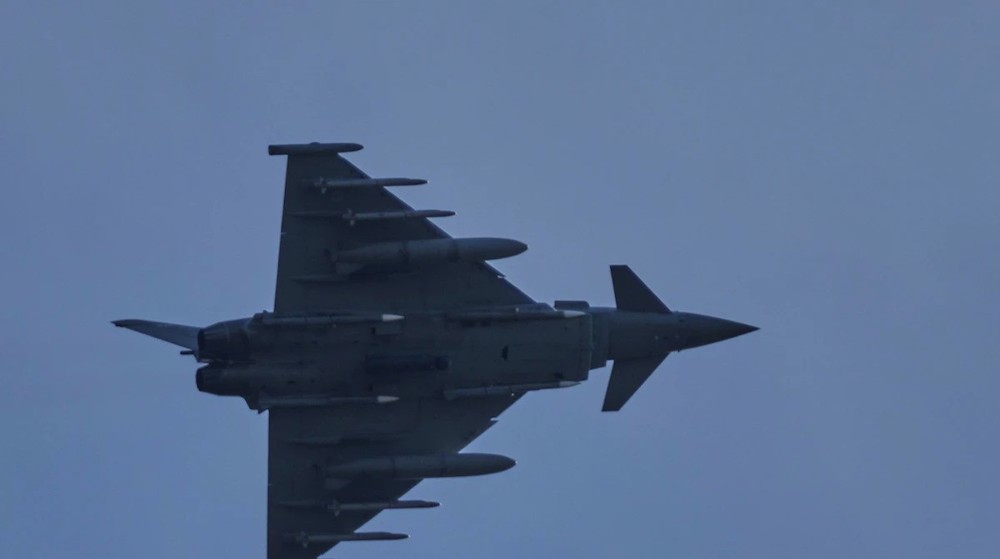
A Typhoon fighter jet takes off from the UK's RAF
Akrotiri air base in Cyprus in early March 2026
On October 20, Press TV reported that Britain is set to deploy RAF Typhoon fighter jets to Saudi Arabia, deepening its military involvement in Riyadh's war against Yemen and a further escalation of Britain's warmongering in the name of "defence".
According to the report, the Ministry of Defence said that the operation would involve RAF Typhoons flying "defensive missions to protect Saudi cities, airports and critical infrastructure" from retaliatory attacks by the Yemeni armed forces. The number of aircraft involved has not been disclosed.
The deployment will be accompanied by military advisers and an Atlas A400M transport aircraft, while an existing commitment to provide air-to-air refuelling support for Saudi warplanes through an RAF Voyager aircraft will continue.
The decision follows discussions between Defence Secretary Wes Streeting and US Secretary of War Pete Hegseth at the Pentagon to join the Saudi aggression against Yemen.
The move comes amid Britain's longstanding military partnership with Saudi Arabia. BAE Systems has supplied Riyadh with 72 Eurofighter Typhoon jets under a deal originally valued at £4.4 billion, while negotiations over a potential additional purchase of 48 aircraft have continued for years.
In a recent statement, the Yemeni Ministry of Foreign Affairs and Expatriates denounced Saudi strikes on civilians and non-military installations as a flagrant violation of international humanitarian law, particularly the Fourth Geneva Convention of 1949 and Additional Protocol I of 1977.
The latest escalation began after Saudi Arabia bombed Sana'a's international airport in July. The Yemeni armed forces responded by enforcing a "blockade for blockade" policy and declaring an embargo on Saudi shipping in the Red Sea.
The Yemeni military has announced several successful naval operations targeting ships linked to Saudi Arabia in the Red Sea, enforcing the blockade and impacting Riyadh's energy exports.
Yemeni forces have also launched retaliatory attacks on targets deep inside Saudi Arabia and made a rapid advance across Yemen's coastal plain over the past month, tightening their grip on the strategic Bab al-Mandeb Strait.
The origin of the war dates back to March 2015, when Saudi Arabia and a US-backed coalition launched a sweeping military campaign and blockade aimed at reinstalling a puppet regime in Sana'a.
Despite years of bombardment and the deployment of advanced Western weaponry, the Saudi coalition has failed to achieve its stated objectives, the Press TV report concludes.

Now in their 20th week of indefinite strike action - the longest of any UCU branch as of Friday, October 23 - in opposition to the next phase of £20m in staff cuts, Goldsmiths University and College Union (GUCU) are calling for urgent fundraising support from across UCU and the wider trade union movement, in order to sustain their action [1].
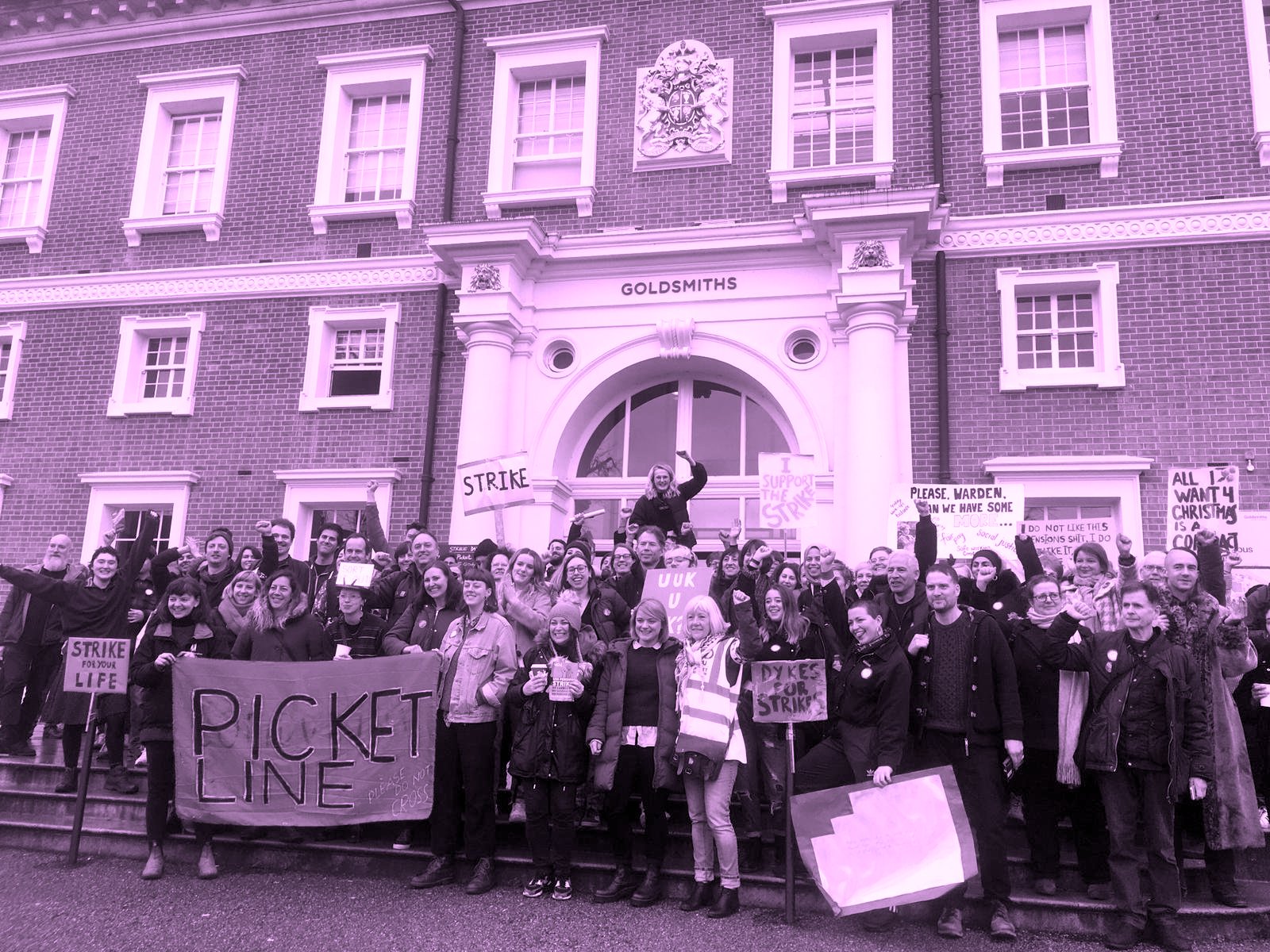
The Goldsmiths UCU's strike centres on a deep dispute over restructuring, job cuts, and the future direction of the university, under "Future Goldsmiths", the university's latest programme of redundancies and restructuring.
The dispute began in April 2026, when Goldsmiths announced the major multi-year restructuring plans, alleging that its "recovery programme" would yield £7.6m in savings, and a further "transformation programme" would result in £16.1m further savings.
The GUCU justly argues that these programmes have led to damaging cuts, including proposed academic redundancies, especially in the arts and humanities. GUCU began a marking and assessment boycott ("action short of a strike") on April 27. This is a powerful tactic which the branch had previously used as part of a successful campaign to prevent compulsory redundancies. In response to the boycott, however, senior management announced the threat of 100% pay deductions for participants - an effective lockout. GUCU, which has a history of effective militancy, then launched indefinite strike action to force management to withdraw both the threat of full pay deductions and the compulsory redundancies.
In a ballot that closed on April 10, 81% of members who voted backed strike action and 92% backed action short of a strike, on a turnout of 63%. Indefinite full strike action has taken place from June 8 in response to the threat of sweeping compulsory redundancies, increased workload, erosion of job security, and the effective management lockout.
Senior management have argued that major staffing cuts are needed as part of plans to make £22m in savings by the end of the 2026-27 academic year, with £20m of those cuts coming from staffing. The proposals could put hundreds of academic and professional-services jobs at risk.
This reflects the wider funding crisis facing English universities, where not only have courses and lectureships come under attack, especially in the humanities, but the trend has become that of integrating universities into the government's and war industries' so-called war-readiness. At Goldsmiths, GUCU has also pointed out that huge sums have been spent on consultants, recruitment services and senior-management salaries. Goldsmiths has an internationally recognised history of creativity, including in art and music, and the arts and humanities are central to its identity. However, it is now in danger of entering a death spiral of repeated cuts, declining provision and falling student confidence, as the union points out.
Despite the impact on students, particularly fine art students, of the action, for which the university must be held accountable, there has also been strong support from the student body. For example, students carried out a 32-day occupation of the library to protest against proposed staff cuts. A 24-hour sit-in, which featured overnight shifts, community meals, and study sessions in solidarity with staff facing potential redundancy, ended after the university management threatened participants with campus bans.
On their home page, GUCU notes:

"This would be the third round of mass cuts in five years. Every previous restructure was presented as the route to financial stability. Instead, staff and students have paid the price while management has continued costly external spending and repeated restructuring. Through Freedom of Information requests, our branch uncovered more than £14 million spent on consultants between 2019 and 2026, alongside at least £6.6 million on recruitment services since 2022. Much of this followed the failed Recovery Programme, which removed internal capacity only for management to spend millions attempting to replace it.
"Our branch believes Goldsmiths cannot shrink its way out of crisis. The university needs stability, investment, and a serious focus on rebuilding student confidence and recruitment, not another round of cuts that undermines its future." [2]
Goldsmiths earlier this month has said that it has made three concessions, all rejected by GUCU, since they do not offer a solution to the crisis. The concessions included: a moratorium on compulsory redundancies until New Year, a voluntary severance scheme, and staggered salary reductions for striking staff. The union points out that the offers do not adequately protect jobs or reverse harmful restructuring. Goldsmiths have said that their three concessions of October 7 are "the strongest package the institution can responsibly offer". In its first official update in several weeks, the university said that it cannot make further concessions, but its "door is always open" to talks.
The university's argument that cuts are unavoidable is unacceptable, and there cannot be compromise on the attacks on Goldsmiths as a major arts institution, which is part and parcel of its identity. The management's proposals do not address the real issues, as the GUCU points out, and can be seen as wanton hooliganism. In fact, the lecturers point out that the university is for self-serving reasons misrepresenting and minimising the scale of the disruption caused by the union's actions, especially in fine art and humanities. In fact, it is reported that more student groups than ever are publicly supporting the GUCU and are demanding that Goldsmiths negotiate seriously. The students' frustration is exacerbated by the fact that they are being asked to pay full fees despite the disruption to their courses.
As the GUCU points out, the ongoing restructuring is leading to unsustainable workloads, erosion of research time, increased casualisation, and loss of specialist staff. The GUCU puts forward that what is needed is a workload model that is transparent, negotiated, and enforceable, protection of research time, and reduction of casual contracts. The union explains that their demands are not made out of self-interest to the detriment of students. On the contrary, they are involved in a student-centred strike, and to this end require adequate staffing to ensure teaching quality, proper workshop access and studio support, especially in Fine Art, restoration of marking and feedback capacity, and a halt to cuts that reduce student choice and academic depth. The short-term concessions offered by the Goldsmiths are not structural solutions to the crisis.
In summary, the struggle of the union and its members at Goldsmiths is a significant one in the overall struggle for the future of education, and against the wrecking of higher and further education by the authorities. The demand that there be no compulsory redundancies arising from the "Future Goldsmiths" restructuring is a red-line. There must be a binding guarantee of no compulsory job losses.
In essence, the teaching staff are declaring that "Enough Is Enough". They must be equal participants in deciding on the future direction of Goldsmiths. Their demand that there be a joint staff-student review of academic portfolio changes and protection of the threatened departments of Fine Art, Humanities, and Social Sciences, is just and must be supported.
Unless Goldsmiths reopens negotiations with new solutions, the Goldsmiths lecturers are determined to continue their strike. Their voice must be heard and their demands acted on.
Notes
1. The threat of a 100% pay deduction places participating staff under severe
financial pressure, and GUCU has launched a fundraising appeal. To donate to
the strike fund, visit: https://goldsmithsucu.org/support-
fund
2. Goldsmiths University and College Union homepage, accessed October 23,
2026
https://goldsmithsucu.org
Receive Workers'
Weekly E-mail Edition: It is free to
subscribe to the e-mail edition
We encourage all those who support the work of RCPB(ML) to also support it
financially:
Donate to
RCPB(ML)
Workers' Weekly is the weekly on
line newspaper of the
Revolutionary Communist Party of Britain (Marxist-Leninist)
Website:
http://www.rcpbml.org.uk
E-mail:
office@rcpbml.org.uk
170, Wandsworth Road, London, SW8 2LA.
Phone: 020 7627 0599:
