
|
|
||||
|---|---|---|---|---|
| Volume 56 Number 29, October 10, 2026 | ARCHIVE | HOME | JBCENTRE | SUBSCRIBE |
Workers' Weekly Internet Edition: Article Index :
Global Day for Palestine:
Stand with Palestine on Third Anniversary of Al Aqsa FloodArticles detailing the struggle on the third anniversary of Al Aqsa Flood:
Ceasefire One Year On: Genocide Continues and Humanitarian Crisis DeepensAl Aqsa Flood Shook Israel's Image, Redrew Region's Balance of Power
General Strike in Palestinian Refugee Camps in Lebanon Marks Third Anniversary of Gaza Genocide
Hamas, Islamic Jihad Discuss Gaza, West Bank Developments and Palestinian National Dialogue in Cairo
Nakhalah on October 7 Anniversary: Palestinians Remain Committed to Resistance
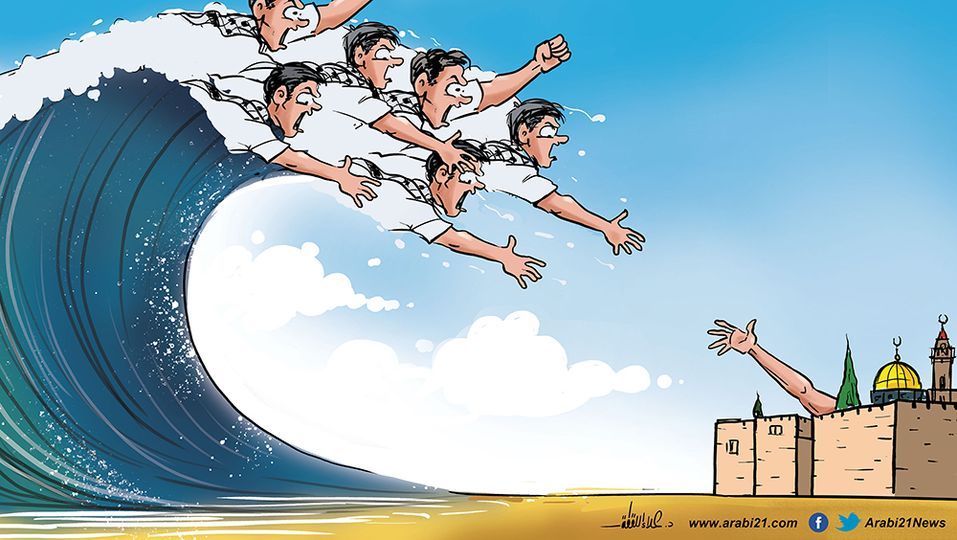
Al Aqsa Flood
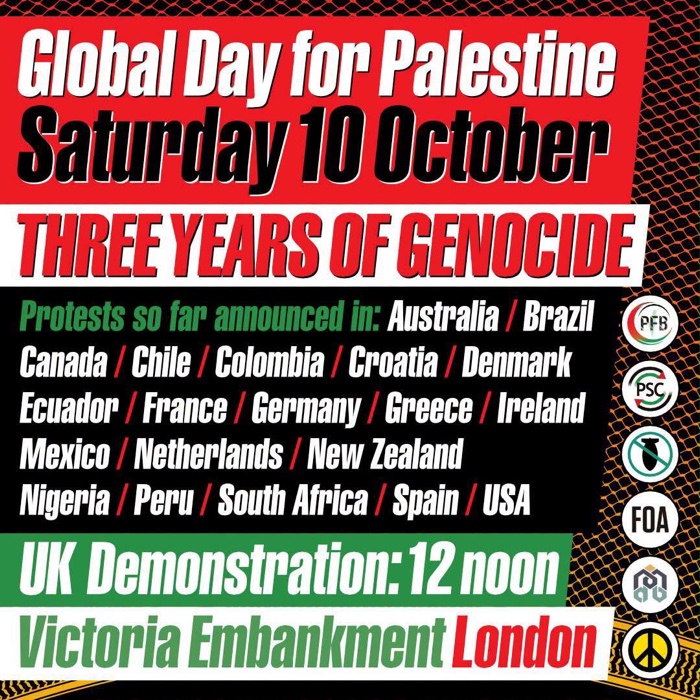
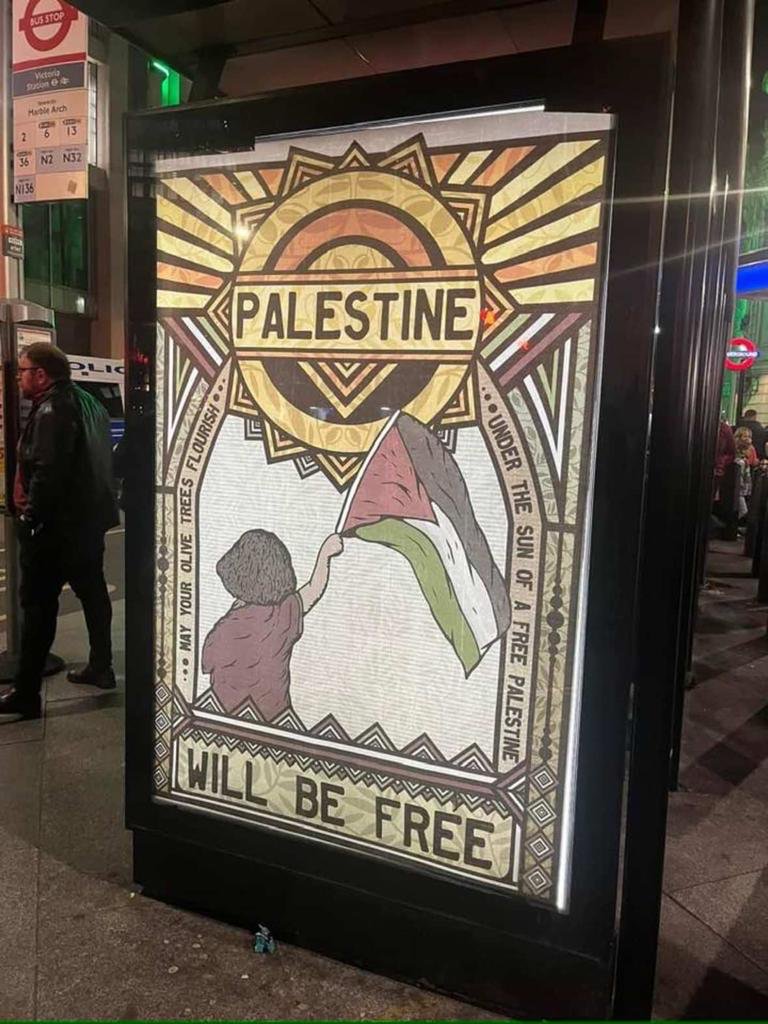
This Saturday, to mark the third year of Israel's genocide, activists around the world will march together on what is hailed as the first fully co-ordinated global day of demonstrations for Palestine. It is reported that some sixty countries will be taking part, with marches, demonstrations, blockades and vigils. In London, the Palestine coalition will be marching from Victoria Embankment to Whitehall in what promises to be a massive show of resilience and solidarity.
The world's people give the call "Stand with Palestine" on this, the third anniversary on October 7 of Al Aqsa Flood. What is being emphasised loud and clear is that the US/Israeli genocide must be ended, and the resistance, which has never ceased, be supported.
Britain has all along been complicit in the genocide. The Burnham government is as mired in warmongering and refusal to call genocide genocide as was the Starmer government. There is little sign that the Burnham government will end the criminal farce of calling people from all walks of life who simply hold up placards stating their stand, as "terrorists" and prosecuting them under so-called terrorism legislation.
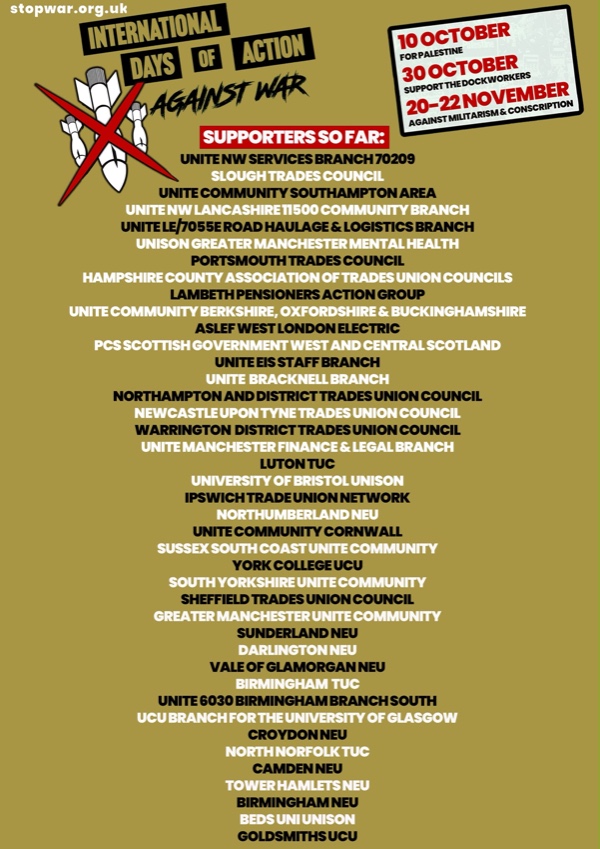
The Burnham government has continued to be complicit in taking part in aggression against Israel, Iran and Yemen under the hoax that this aggression is "defensive" and not "offensive". It is reported that 156 fighter and drone strikes have been recently registered against Ansar Allah in Yemen, and these have been refuelled by British aircraft. This is an escalation of the policy of Starmer vis-a-vis Yemen, and there is no indication that Burnham intends to retreat on this. On the contrary, Burnham is making common cause with the enemies of peace. He has taken over the theme of "war readiness" from his predecessor, arguing that this is in accord with fiscal rules, rules which are supposed to be set in stone and the war industries are necessary for "national security", when security can only come from fighting for the rights of all. Neither is an "ethical framework for the defence sector" the way forward when what is required is to build unity around the necessity for an anti-war government. This has been proven at the 2026 TUC Congress and elsewhere.
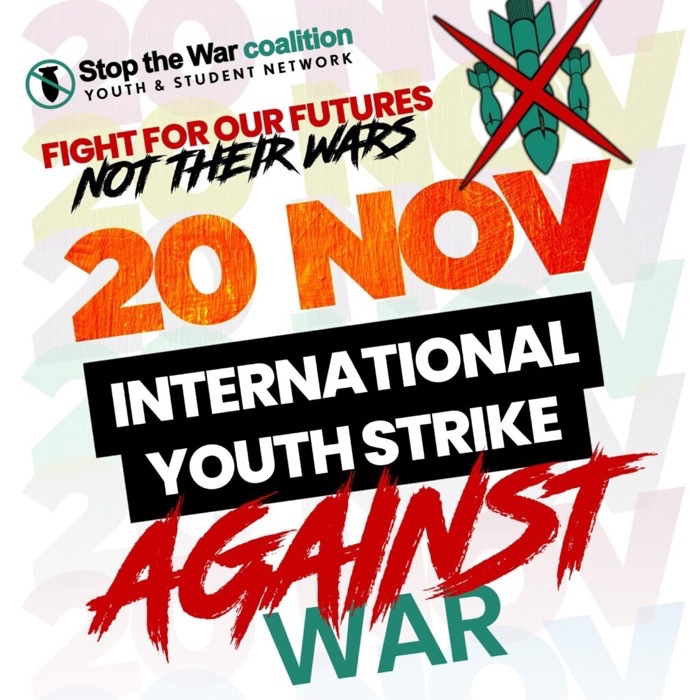
Youth too are demonstrating with fervour against the subservience of the establishment, such as many universities, to the arms industries and military recruitment.
The point is that the resistance of the Palestinian people is not only just but is necessary, and for the heroic Palestinian people it is their requirement in showing and building their identity as a people. They will not accept genocide. Neither will the world's people bow to the extreme violence and urge for obliteration that the US and their partners in crime are unleashing.
RCPB(ML) declares: Stand with the Palestinian Resistance! End the Genocide! From the River to the Sea, Palestine Will Be Free!

.jpeg)
The Palestinian Information Centre, October 7, 2026
A year after the ceasefire agreement came into effect in the Gaza Strip, a new tally by the Palestinian Centre for Human Rights reveals that the relative calm imposed by the agreement did not put an end to Israeli violations or to the worsening humanitarian crisis, but rather attacks continued at a less intense pace, while basic life necessities remained out of reach for broad sectors of the Strip's population.
In a report released by the Palestinian Centre for Human Rights on October 7, 2026, coinciding with the passage of almost year since the ceasefire, it confirmed that the agreement reduced the frequency of attacks, but did not stop what it described as acts falling under the acts specified in Article Two of the Convention on the Prevention and Punishment of the Crime of Genocide.
During a year of the ceasefire, the report documented the martyrdom of at least 1,445 Palestinians and the injury of 5,072 others, while the martyrs tally up to October 3 included 312 children and 139 women.
It pointed out that the tally does not include all those missing under the rubble, nor deaths resulting from deprivation of basic necessities, noting that the tally of victims since the start of the Israeli attack on the Gaza Strip in October 2023 reached, according to the Ministry of Health, 74,228 martyrs and 175,188 injured.
The report explained that the patterns of killing that prevailed during military operations continued during the ceasefire period, including bombarding homes over the heads of their occupants, targeting civilian gatherings, and killing displaced persons inside tents and shelter Centres, as well as killings near what is known as the "Yellow Line" and restricted access areas.
It also documented the targeting of members of the civilian police and those in charge of maintaining order, alongside the killing of civilians while attempting to secure food and livelihoods.
Injuries without recovery
The effects of the war did not stop at the numbers of the dead, as the report confirmed the continuation of physical and psychological harm to the population, pointing to the recording of about 2,500 new injuries requiring rehabilitation during a year of the ceasefire.
Thus, the cumulative tally since October 2023 rose to about 43,000 injuries likely to alter the course of the lives of those affected, including cases of amputation, spinal cord injuries, brain injuries, and severe burns.
Many of the injured face difficult conditions after leaving hospitals, returning to tents or damaged buildings that do not provide an appropriate environment for recovery, amid a shortage of rehabilitation services, artificial limbs, and assistive devices.
Gaza has not entered "post-trauma"
The report considers that the population of the Gaza Strip has not actually entered a "post-trauma" phase, because the sources of trauma themselves remain standing.
Thousands of families are still waiting to know the fate of their missing sons and daughters, or to retrieve bodies from under the rubble, or to obtain approvals for their patients to travel, while other families await an opportunity to return to their homes or restore their source of income.
The report noted an assessment published in April 2026 showing moderate or severe signs of anxiety, fear, and loss of hope for the future among more than 60% of youth.
Sleep disturbances, fear, and social withdrawal also continue among children, coinciding with the exhaustion of health workers who provide treatment to others while they themselves face loss and displacement.
60,000 Palestinian children lost one or both parents
The report's figures reveal the scale of the disaster that befell family structures in Gaza, with approximately 60,000 children who lost one or both of their parents, and more than 26,000 widows.
The loss of the breadwinner leaves surviving women with additional burdens related to care and securing basic needs, amid the absence of income, housing, and services, while children lose the sources of protection and stability they need.
According to the report, the continuation of these conditions throughout a year of the ceasefire kept grief, fear, and helplessness a part of daily life, and undermined the population's ability to imagine a future where they can restore their lives.
Medical treatment, housing, and food: Restricted necessities of life
On the health front, the report showed that Israeli restrictions kept medical treatment, housing, food, and other requirements for survival out of reach for broad sectors of the population.
It pointed out that about 47% of essential medicines have run out, while the number of patients and wounded requiring treatment outside the Strip exceeded 20,000.
During the years of the war, 1,628 patients died while waiting for evacuation, while cancer, kidney, heart, and diabetes patients faced intermittent treatment dependent on the availability of medicine, fuel, and consumables, alongside Israeli approvals for patient travel.
As for housing, about 94% of the Strip's population needed shelter assistance and non-food items in June 2026.
At the same time, about two-thirds of the Gaza Strip's area remained under Israeli military control, confining the majority of the population to a limited geographic patch, where hundreds of thousands live in dilapidated tents or damaged and cracked buildings, amidst risks threatening their safety.
Aid: Gap between the agreement and reality
The report provides a reading of the movement of trucks entering the Strip during the period between 13 October 2025 and 16 August 2026, showing that the daily average did not exceed about 211 trucks, compared to an announced rate of 600 trucks within the agreement's arrangements.
The daily average of aid trucks also decreased by about 41% when comparing the beginning of the monitored period with its end, coinciding with a noticeable rise in private sector trucks.
Families remained largely dependent on aid and community kitchens, at a time when bringing in fuel, raw materials, power equipment, and repair gear remained restricted, preventing the restoration of local capacity to produce food and provide job opportunities.
Exhausted economy and high unemployment
The economy was not immune to the effects of war, as the report showed a contraction of the Gaza Strip's economy by about 5% in the first quarter of 2026 compared to the previous quarter, after the unemployment rate reached about 78% during the year 2025.
Factories, workshops, farms, and fishing boats remained unable to resume their activity due to destruction, access restrictions, and lack of equipment and production inputs.
Consequently, the availability of some goods in the markets was not enough to pull families out of their crisis, as loss of income drove families to reduce meals, go into debt, sell their remaining belongings, and even postpone medical treatment to cover daily needs.
Water, sanitation, and education: Endless crises
Restrictions extended to water and sanitation networks, waste management, and rubble removal, keeping the population near sources of pollution, disease, and war remnants, amid the impossibility of repairing services and operating them regularly.
In education, Gaza's children were deprived of formal education for the fourth consecutive academic year, after large numbers of schools were destroyed or converted into shelter Centres.
The educational process shifted to temporary spaces lacking the requirements for safe and appropriate education, at a time when the education crisis overlaps with hunger, displacement, injuries, and loss of income sources, increasing the risks of school dropout and involvement in the labour market, including child labour.
Difficulties also redouble for children with disabilities, given their limited access to education, rehabilitation services, and necessary support.
Call for international action
At the conclusion of its report, the Palestinian Centre for Human Rights called on the international community to act to stop acts of genocide and protect the population of the Gaza Strip, demanding that states parties to the Convention on the Prevention and Punishment of the Crime of Genocide stop supplying Israel with weapons and ammunition, suspend any cooperation that could contribute to the continuation of crimes, and ensure compliance with provisional measures issued by the International Court of Justice.
It also demanded lifting the blockade, opening border crossings, securing the population's needs, facilitating the evacuation of the sick and wounded, and bringing in materials and equipment necessary to repair housing and facilities, and restore services and livelihoods.
It further stressed the necessity of stopping displacement plans and the withdrawal of Israeli forces to allow the displaced a voluntary, safe, and dignified return to their areas, alongside supporting the prosecution of those responsible for crimes before the International Criminal Court and competent national courts, and ensuring redress for Palestinian victims.
Ceasefire year: No end to the crisis
According to what the report documents, the passage of a year since the ceasefire did not turn into a real beginning for a recovery phase in the Gaza Strip; killings continued, injuries accumulated, patients remained waiting for treatment, and hundreds of thousands remained without safe housing, while restrictions continued to affect food, water, health, education, and work.
The tally reveals that the ceasefire, despite reducing the level of military operations, did not end the conditions that made daily life in Gaza hostage to the humanitarian crisis, nor did it open the way for real recovery or a stable return to normal life.
The Palestinian Information Centre, October 7, 2026
The repercussions of the Al-Aqsa Flood operation have extended far beyond the battlefield in Palestine.
According to a number of Arab political commentators and anti-normalisation figures, its effects have reached the foundations of the Israeli project itself, which influenced Israel's regional and international standing, the future of normalisation efforts, and wider regional power dynamics. The operation has also brought the Palestinian cause back to the centre of global political and popular attention.
In assessments offered by Maan Bashour, President of the Arab International Centre for Communication and Solidarity; Ahmed Wehman, President of the Moroccan Observatory Against Normalisation; and Maher Al-Taher, Secretary-General of the Arab National Congress, a common conclusion emerged: October 7, 2023, marked a strategic turning point in the Palestinian-Israeli conflict.
The operation, they argue, exposed the limits of Israeli power and undermined a key part of the image Israel had spent decades cultivating as an unrivalled regional force capable of imposing its will throughout the region.
Israel's vulnerability put to the test
Bashour believes that the Al-Aqsa Flood exposed the fragility of both the Israeli occupation and the Western system that supports it, producing political, diplomatic, and popular shifts that extended far beyond the military arena. He argues that the confrontation restored Palestine to the forefront of Arab and international attention.
According to Bashour, the events of October 2023 did not emerge in isolation but were the result of a long process of Palestinian and Arab resistance. He says the operation demonstrated the ability of the Palestinian resistance, together with supporting fronts across the region, to create military and political surprises.
"The war revealed deep contradictions within Israeli society, including tensions between political and military leadership," Bashour explained, adding that the war resulted in growing public protests related to the war and Israeli captives held in Gaza. These developments, he argues, raise questions about Israel's ability to sustain prolonged military campaigns despite its advanced military capabilities and extensive Western backing.
Bashour further contends that the war highlighted the depth of the strategic relationship between Israel and the United States. He argues that Western military, political, and diplomatic support helped sustain Israel's military campaign, even as divisions widened within Western societies and pro-Palestine demonstrations spread across universities and public spaces.
Collapsing image of the "regional policeman"
Focusing on normalisation efforts, Ahmed Wehman argues that Al-Aqsa Flood dealt a significant blow to the foundations of Israel's image as a regional power capable of providing security guarantees to its allies.
Wehman says that October 7 exposed serious weaknesses in Israel's security and intelligence apparatus and undermined one of the principal arguments used to promote normalisation: the claim that Israel possesses overwhelming military, technological, and intelligence superiority capable of serving as a regional security umbrella.
He points to what he describes as a striking contradiction. While Israel had long presented itself as a source of protection for others, it ultimately required extensive external support, particularly from the United States and Western powers, when confronted with a major security challenge.
According to Wehman, possessing the ability to wage war does not necessarily translate into an ability to provide security and stability. He argues that, in the eyes of growing sectors of public opinion, Israel has shifted from being portrayed as a source of security to being viewed as a contributor to regional instability.
From this perspective, he believes the war halted the momentum of normalisation initiatives that had been moving toward the establishment of a broad regional framework incorporating Israel in the fields of security, defence, intelligence, technology, and economics. The renewed centrality of the Palestinian issue, he says, fundamentally altered that trajectory.
Strategic shift beyond Gaza
Maher Al-Taher places Al-Aqsa Flood within a broader historical context, describing it as a strategic turning point whose consequences will extend far beyond Gaza and Palestine to affect Israel's future, the Arab region, and regional and international power balances.
Al-Taher points to two interconnected realities highlighted by the past three years. The first, he says, is the Palestinian people's ability to endure despite immense destruction, displacement, and suffering. The second is the exposure of what he describes as the true nature of the Israeli project, its expansionist objectives, and the role played by the United States and Western governments in supporting it.
According to Al-Taher, the confrontation undermined the image of the Israeli military as an invincible force and challenged the perception of an all-powerful security system capable of maintaining complete control. The events demonstrated, he argues, that military superiority alone is insufficient to resolve the conflict or break the will of the Palestinian people.
He also contends that Israel attempted to compensate for strategic setbacks through extensive destruction targeting the foundations of Palestinian life. In his view, attacks on homes, hospitals, schools, and infrastructure went beyond military retaliation and reflected an effort to undermine Palestinians' ability to remain steadfast on their land.
Palestine returns to centre of global attention
The three commentators converge on a central conclusion: the war restored the Palestinian cause to the forefront after years of attempts to marginalise it or reduce it to a purely humanitarian or security issue.
Al-Taher argues that Palestine has re-emerged as a national liberation cause. Bashour points to expanding solidarity with Gaza across the Arab world and internationally, as well as a growing gap between official government positions and public sentiment.
Wehman similarly argues that the war exposed the limits of normalisation agreements in reshaping Arab public opinion. Continued occupation, war, and violations, he says, have weakened efforts to present Israel as a normal and accepted partner in the region.
At the same time, shifts in Western public opinion became one of the most notable outcomes of the war. Universities and major cities across the West witnessed large-scale demonstrations in support of Palestine, while images of destruction, death, and humanitarian suffering in the Gaza Strip placed increasing pressure on the Israeli narrative.
From battlefield to courts, diplomatic arenas
The transformations identified by the three commentators were not limited to politics and public opinion. They also extended into legal and diplomatic spheres.
Bashour notes that the war pushed the Palestinian issue into new international legal arenas, citing South Africa's case before the International Court of Justice accusing Israel of committing genocide in Gaza. He argues that legal efforts should be expanded to pursue accountability for alleged violations.
He maintains that the coming period requires greater coordination of political, legal, and media efforts, alongside converting international solidarity into practical pressure on Israel and the states supporting it.
Normalisation faces new test
The three analyses suggest that one of the most significant arenas affected by the Al-Aqsa Flood concerns Israel's future relationship with the wider region.
According to Wehman, the security and economic promises that accompanied normalisation initiatives no longer carry the same weight they did before the war, particularly after Israel itself relied heavily on American and Western support in confronting major security challenges.
Al-Taher argues that the war demonstrated the impossibility of separating regional restructuring projects from the Palestinian question. Attempts to bypass the Palestinian people's national rights through regional arrangements, he contends, will not resolve the underlying causes of the conflict.
For his part, Bashour emphasises the need to transform these developments into a broader Arab and Islamic strategy encompassing political, legal, media, and economic action, while strengthening Palestinian steadfastness and confronting normalisation efforts.
The battle is not over politically
Despite differences in emphasis, the three commentators agree that the consequences of the Al-Aqsa Flood cannot be measured solely by developments on the battlefield or the scale of destruction and losses. They argue that its significance lies equally in the political and popular transformations it generated, its impact on Israel's image, and the broader debate it sparked over the future of the region.
Al-Taher warns that the next phase may witness Israeli and American attempts to translate the war's outcomes into long-term political and security arrangements.
Bashour, meanwhile, cautions against the possibility of a wider regional confrontation and the consequences such an escalation could bring.
At the same time, the analysts maintain that the scale of Palestinian sacrifices requires Arab and Palestinian political actors to move beyond expressions of solidarity toward concrete action. Their priorities include Palestinian unity, rebuilding national institutions, supporting Gaza's resilience, and advancing legal, diplomatic, and media initiatives.
Taken together, these assessments suggest that Al-Aqsa Flood represented more than a military confrontation. They view it as a watershed moment that challenged perceptions of Israeli power, exposed the limitations of normalisation projects, restored Palestine to the centre of international attention, and opened a broader debate about the future of the region and its balance of power, with the consequences of the war likely to continue shaping the conflict for years to come.
The Palestinian Information Centre, October 7, 2026
Palestinian groups and grassroots movements in the Nahr al-Bared and Beddawi refugee camps in northern Lebanon announced a strike on Wednesday that included the closure of schools and educational institutions run by the United Nations Relief and Works Agency for Palestine Refugees, UNRWA, marking the third anniversary of the start of Israel's genocidal war on the Gaza Strip.
Organisers said the action was intended to reaffirm the connection of Palestinian refugees in the diaspora to their national cause and demonstrate their solidarity with Gaza and its people.
The strike was limited to the Nahr al-Bared and Beddawi camps and was called by the Palestinian Youth Gathering, alongside local grassroots movements and activists. Other Palestinian refugee camps in Lebanon did not participate.
Organisers called for October 7 to be observed as a national occasion to remember Palestinians killed and wounded and the sacrifices made by the Palestinian people, while educating younger generations about the Palestinian cause and the right of return as the consequences of Israel's war on Gaza continue.
The Palestinian Information Centre, October 7, 2026
Hamas and Palestinian Islamic Jihad held talks in the Egyptian capital, Cairo, on Wednesday to discuss developments in the Gaza Strip and the occupied West Bank, as well as the latest political developments and efforts to advance Palestinian national dialogue.
The meeting brought together a Hamas delegation headed by its West Bank chief Zaher Jabarin and a Palestinian Islamic Jihad delegation led by the movement's Secretary-General Ziad al-Nakhalah.
The two delegations discussed political and field developments related to the Palestinian cause, as well as ways to support the steadfastness of the Palestinian people amid the current challenges.
The talks also addressed the Israeli escalation in the occupied West Bank, including settlement expansion, settler attacks, Israeli raids and continuing violations against Aqsa Mosque.
The two movements also discussed ways to advance Palestinian national dialogue and narrow differences among Palestinian factions and political forces in a manner that strengthens Palestinian unity and serves national interests, alongside several other issues related to the current political stage.
Egyptian efforts to advance national dialogue
A Hamas delegation arrived in Cairo earlier Wednesday as part of continuing consultations over initiatives aimed at advancing internal Palestinian national dialogue.
The visit coincides with consultations hosted by Cairo in preparation for a comprehensive Palestinian dialogue, following visits to Egypt by Fatah officials Jibril Rajoub and Mohammad Shtayyeh for discussions with Egyptian officials and Palestinian factions ahead of the proposed talks.
The Egyptian efforts build on previous rounds of Palestinian dialogue hosted in Cairo, including a meeting held on January 14, 2026, with the participation of Palestinian factions and political forces to discuss issues related to the Gaza ceasefire.
Talks over a national electoral list
Political discussions in Cairo are also examining the possibility of forming a broad national list to contest the upcoming Palestinian legislative elections, potentially bringing together parties with different political and organisational backgrounds in an attempt to move beyond traditional factional divisions.
Reports indicate that Palestinian political forces have reached a preliminary understanding to discuss a potential electoral list that could include Hamas and Palestinian Islamic Jihad, alongside the Fatah Democratic Reform Current led by Mohammed Dahlan, Nasser al-Qudwa's current and the Al-Nasser Salah al-Din Brigades.
Palestinian President Mahmoud Abbas issued a presidential decree in July setting Saturday, November 28, 2026, as the date for Palestinian Legislative Council elections.
The decree called on Palestinians in Jerusalem, the occupied West Bank and the Gaza Strip to participate in free and direct legislative elections to choose members of the Palestinian Legislative Council on the scheduled date.
Al Mayadeen, October 6, 2026
Palestinian Islamic Jihad Secretary-General Ziad al-Nakhalah says Palestinians remain steadfast in confronting the Israeli-US aggression and committed to their historical rights.
The Palestinian people remain steadfast in confronting the Israeli-US aggression and committed to their historical rights, Palestinian Islamic Jihad Secretary-General Ziad al-Nakhalah said on Tuesday.
His statement came on the 39th anniversary of the establishment of the Palestinian Islamic Jihad movement and the third anniversary of Operation Al-Aqsa Flood.
Al-Nakhalah said Operation Al-Aqsa Flood was a "natural response to Israeli aggression against the Palestinian people," stressing that Palestinians had faced continuous aggression for three years.
He said the aggression was entering its fourth year with more than 80,000 Palestinians killed, adding that those who were martyred across the various fronts would remain present throughout history.
The Palestinian Islamic Jihad leader also said the continued attempts to displace Palestinians from Gaza were "clear evidence of the malicious objectives of the entity and its allies, foremost among them the United States".
He stressed that "thousands of Palestinians confronted the enemy with great resolve," adding that Palestinians, through the determination of their fighters, refuse to forsake their land to those responsible for the killing and will continue resisting through all available means as long as the "Zionist project remains in place."
Receive Workers'
Weekly E-mail Edition: It is free to
subscribe to the e-mail edition
We encourage all those who support the work of RCPB(ML) to also support it
financially:
Donate to
RCPB(ML)
Workers' Weekly is the weekly on
line newspaper of the
Revolutionary Communist Party of Britain (Marxist-Leninist)
Website:
http://www.rcpbml.org.uk
E-mail:
office@rcpbml.org.uk
170, Wandsworth Road, London, SW8 2LA.
Phone: 020 7627 0599:
