
|
|
||||
|---|---|---|---|---|
| Volume 56 Number 20, June 27, 2026 | ARCHIVE | HOME | JBCENTRE | SUBSCRIBE |
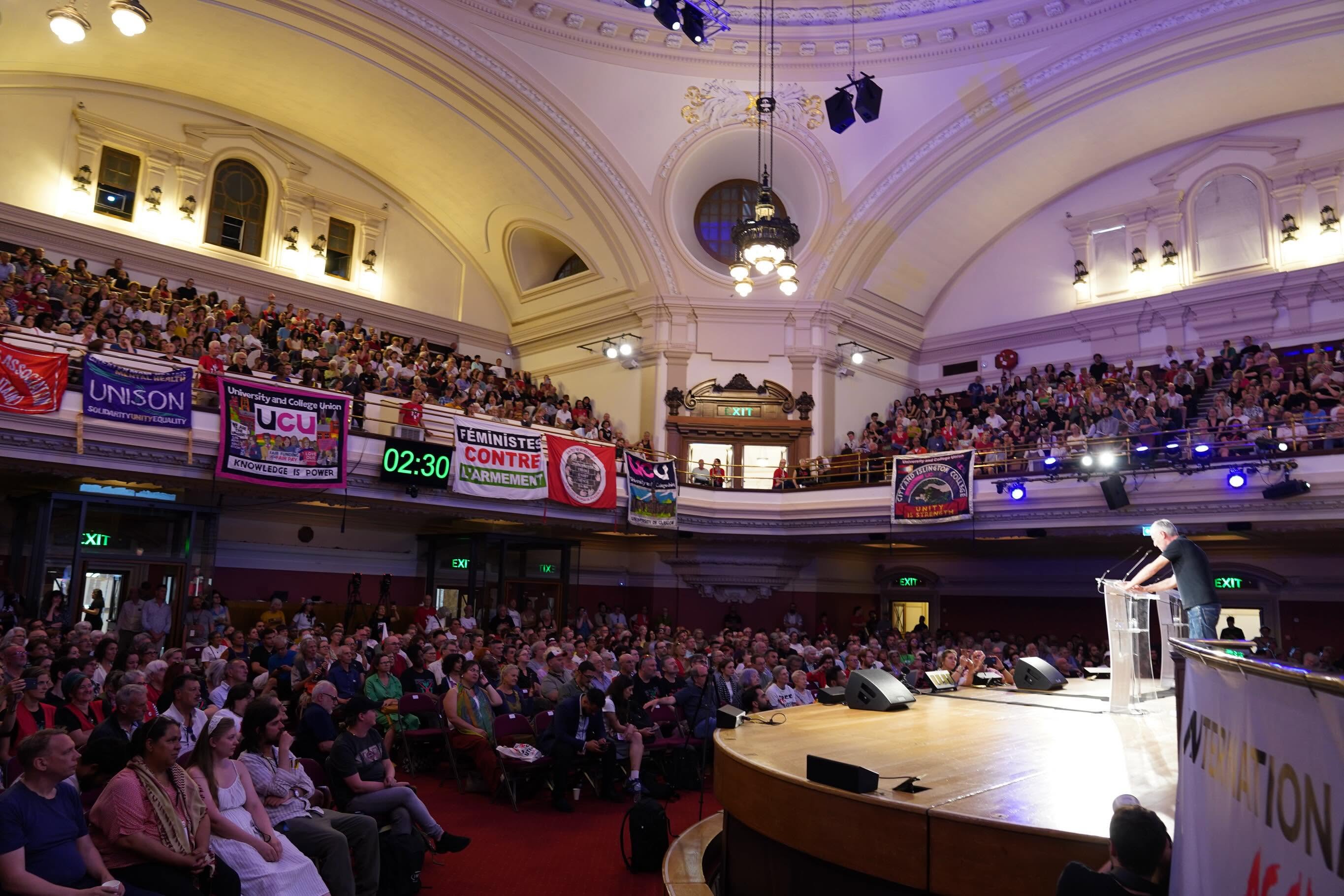
Photo: StW
The International Conference Against War was a great success. It was the second conference of an international movement that was initiated at a huge meeting at the Dôme de Paris last October.
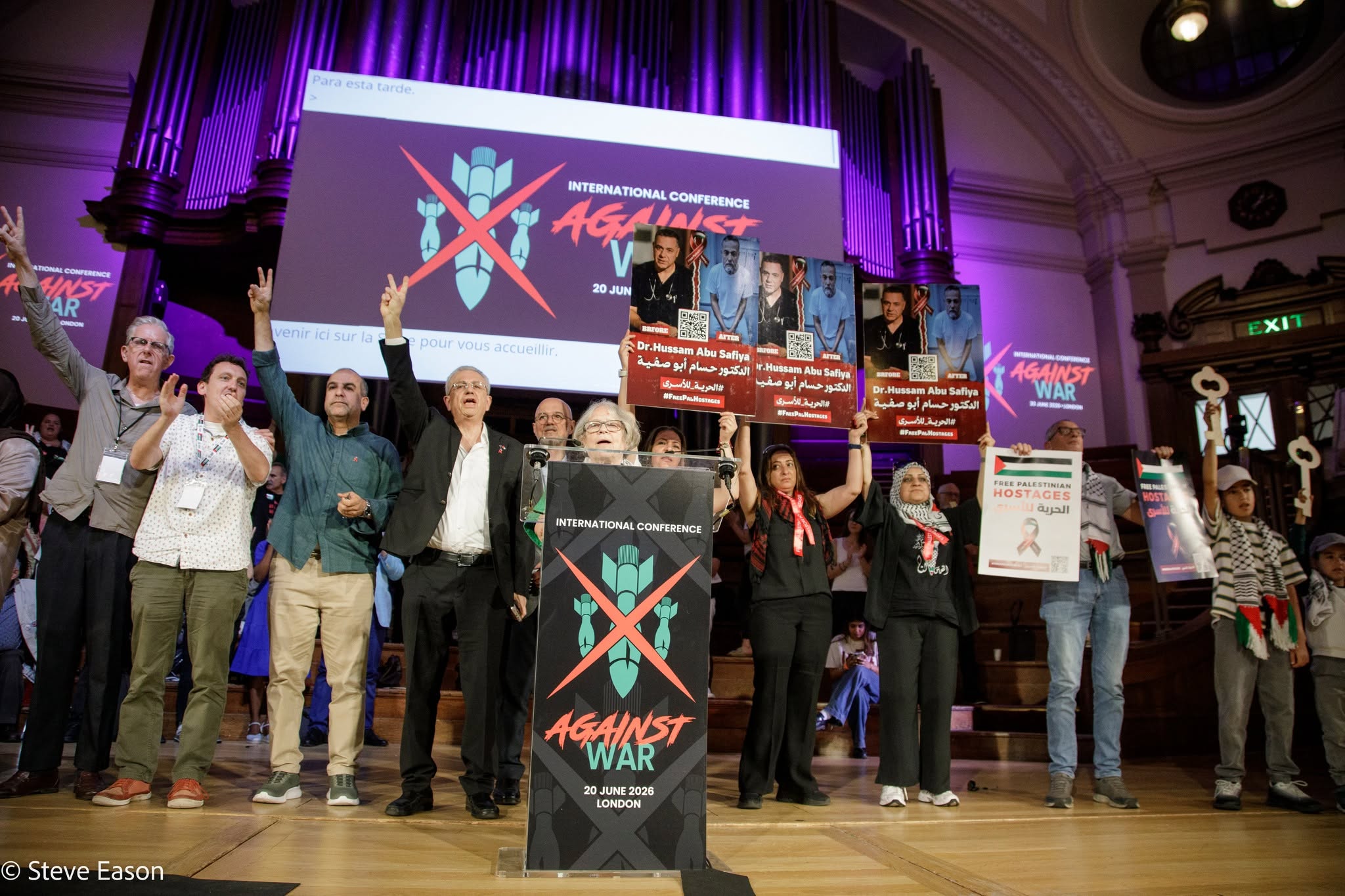
Photo: Steve Eason
More than 2,600 anti-war activists packed into Westminster Central Hall, coming from 27 countries outside of Britain. Hundreds travelled from France, over a hundred from Spain and at least fifty from Germany. In fact, people travelled from across the world - from the USA, Canada, France, Germany, Switzerland, Spain, Italy, Denmark, the Netherlands and more.
Thousands of trade unionists came from across Europe, Britain and beyond. The conference was supported by 14 UK national unions, one hundred other UK organisations and 116 regional and local union bodies. Delegates attended from the Paris CGT union branch of the biggest hospital complex in Europe, from the Federation of Industry of the Spanish CCOO, the dockworkers in Piraeus, Greece, and many more.
Activists were spread across two packed halls in the Central Hall, Westminster. In the Great Hall, the first session opened with a celebration of the unprecedented Palestine movement in Britain. Then members of parliaments and trade union leaders were joined by anti-war and pro-Palestine activists from the US to Iran and Bahrain, including Mustafa Barghouti from the Palestinian National Initiative. The conference was also addressed by Ukrainian and Russian activists.
As the organisers pointed out, the conference was one of the most significant anti-war events in recent decades. It adopted a statement which summarised the key issues and called for three international days of demonstration and action. It was undoubtedly a leap forward for the international movement, as the organisers claimed.
The organisers assessed the Conference as the next big step to co-ordinated action across borders to stop the drive to war. An important conference statement was released, together with a call to action. Congratulations are due to the organisers for their tireless work.
A video capturing the speeches from the Great Hall, and conveying some of the atmosphere, can be seen at: https://youtu.be/YOVqOJ1iU58
Conference Statement
https://d30m66y232rpq4.cloudfront.net/uploads/2026/06/Conference-Statement.pdf
Call to action
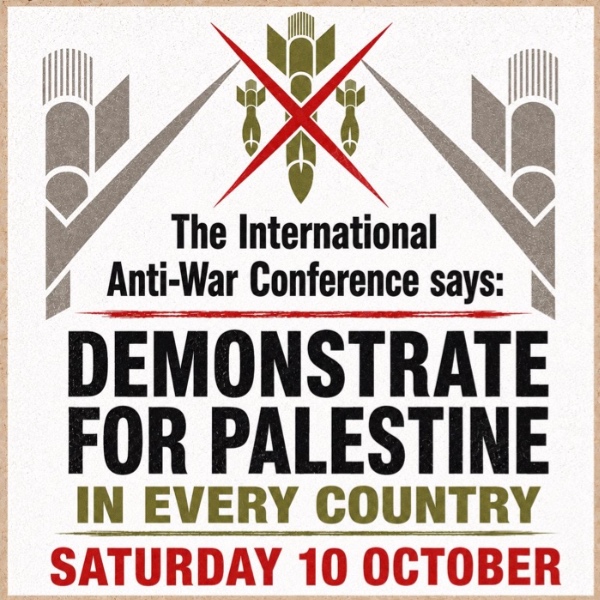
1. A joint international day of demonstrations in support of a free Palestine on October 10.
2. A day of action proposed by dockworkers in Italy, France and Greece, date to be confirmed.
3. An international weekend of demonstrations against militarisation, the drive to war and conscription on November 21 and 22.
Austerity and Militarisation
International anti-war conference in London attracts 3,000 activists. Spending on the arms build-up is dismantling social welfare systems. Protests grow louder across Europe. EU imposes draconian sanctions on individuals. Extract from report of german-foreign-policy.com/.
A new movement against the unprecedented militarisation across Europe is gaining momentum as international protests widen and anti-war conferences set the resistance agenda. On June 14, some 12,000 people took to the street in Brussels under the banner "Welfare, not Warfare!" in response to massive rearmament programmes. Social welfare systems are being dismantled across Europe to finance militarisation. The Brussels demonstration was followed on Saturday by a major international anti-war conference in London, attended by nearly 3,000 people from Europe, North America and the Middle East. The discussion highlighted the West's brutal war policies and the dramatic collapse of healthcare, education and pensions. "Austerity and militarisation" are "two sides of the same coin", declared the president of the British food industry union, the BFAWU. Further Europe-wide protests are planned for the coming autumn, including a day of action by dockworkers. But the upturn in protest has been accompanied by increased repression. Journalists, for example, are being targeted with EU sanctions on the grounds that they are allegedly collaborating with an enemy power - Russia. In this way, the EU is putting in place a flexible system of punishment that operates outside the rule of law in order to safeguard its war policy from criticism.
International Anti-War Conference
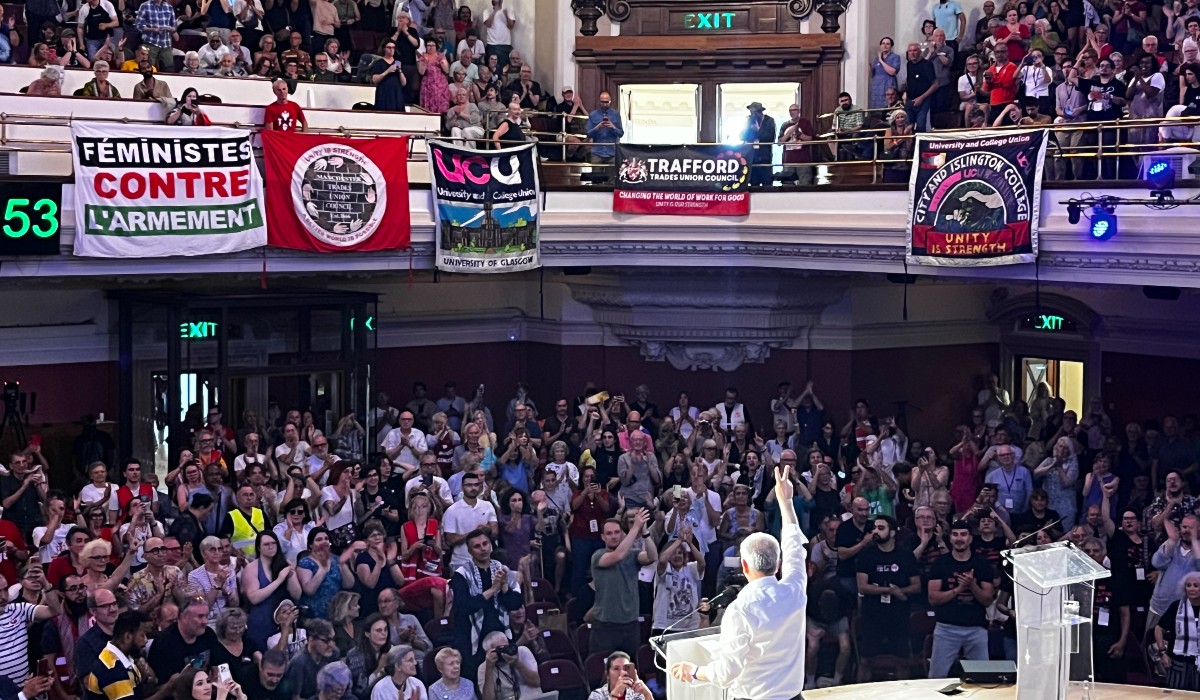
Photo: StW
Attracting almost 3,000 people from Europe, North America and the Middle East, the second international anti-war conference in Europe was held on Saturday within just nine months of the first. On October 5, 2025, more than 4,000 activists had already gathered in Paris for an international meeting to protest against war preparations and the unprecedented surge in militarisation across Europe. In addition to the individuals participating, the follow-up event in London drew delegations from around twenty countries. Trade unions were particularly well represented, including the Britain's public services union Unison - the country's largest union with over 1.4 million members, along with the militant British railway workers' union, the RMT. From France came delegates of the major trade unions CGT and Force ouvrière, and from Italy's CGIL. Other trade unions from a number of other countries also came along to this international show of solidarity in Westminster Central Hall. The conference was organised by the Stop the War Coalition, an organisation founded September 2001 to campaign against the then imminent war in Afghanistan. Back then, it was one of the forces behind the massive demonstration against the impending Iraq War on 15 February 2003. As many as one million people - perhaps even far more - flooded the streets of London to protest against the war.
Two sides of the same coin
The contributions to conference discussion were directed, on the one hand, against current wars, most of which are being waged by the United States, with Israel playing a central role in some cases - such as the bombing of Iran and Lebanon, not to mention the genocidal onslaught in the Gaza Strip. Speakers also shone a light on the US assault on Venezuela and the abduction of its president, Nicolás Maduro. The conference condemned the Trump administration's Cuba blockade and military threats to "own" the country. Speakers also discussed ongoing wars in Sudan, the Democratic Republic of the Congo, and the Sahel. The conference denounced the arms build-up by the EU, as seen in the Commission's 800-billion-euro "ReArm Europe Plan/Readiness 2030". "We do not want US imperialism, and we do not want European imperialism," said Lindsey German, a founding member and, to this day, a leading figure in the Stop the War campaign. Many speakers highlighted the inextricable link between militarisation and the radical dismantling of social security systems currently taking place across Europe. "Austerity and militarisation" are merely "two sides of the same coin", noted Ian Hodson, President of the UK's food workers union, the BFAWU, illustrating the point with the austerity measures imposed by the government of outgoing Prime Minister Keir Starmer [...]
Europe-wide protests
The London Anti-War Conference was preceded by a growing number of national and international protests against militarisation. In Germany, school pupils have seized the initiative and staged so far three school strikes in protest against the reintroduction of compulsory military service. In Belgium, fifteen country-wide demonstrations have taken place over the past year and a half, some attracting up to one hundred thousand participants. They are demanding an end to the Belgian government's harsh austerity policies - and to the military expansion that makes the scale of these austerity measures "necessary" in the first place. On June 14, the first major Europe-wide demonstration against the militarisation of the EU was held in Brussels. Around 12,000 people responded to the call by the "Stop ReArm Europe" alliance and the Belgian Stop Militarisation campaign, whose message is "Welfare, not Warfare". In the winter, tens of thousands took part in protests by dockworkers in over twenty ports, mainly around the Mediterranean. The co-ordinated strike action on February 6 was directed against the militarisation of the EU in general, and against the use of ports for war logistics, in particular, especially the weapon shipments for Israel's genocidal war. Another round of protests is planned for the autumn. There will be a day of action by dockworkers in October and a weekend protest against militarisation in November.
[...]