
|
|
||||
|---|---|---|---|---|
| Volume 52 Number 23, October 8, 2022 | ARCHIVE | HOME | JBCENTRE | SUBSCRIBE |
Workers' Weekly Internet Edition: Article Index : ShareThis
An Executive at War with Itself
Cost-of-Living Crisis:
How the Cost-of-Living Crisis Is Affecting the People
School Budget Cuts Follow "Mini-Budget"Workers' Forum:
NEU Warns of Impending Strike BallotLetter to the Editor:
The Teachers' Struggle and the Struggle for the Alternative

In the conflict within the echelons of the ruling elites, the contention to capture exclusive hold of the levers of executive power, the police powers concentrated in and wielded by the executive, has escalated into a situation where the executive is at war with itself.

The contention is one between those, represented by the Prime Minister and the Chancellor of the Exchequer, who stand for schemes which make no bones about the aim of paying the rich and continuing the privatisation of the public sector and social programmes; and those whose manoeuvres were evident in the "U-turn" performed by Truss and Kwarteng in not going ahead with the proposal to scrap the top tax band of 45% on incomes of over £150,000 p.a. It looks like the latter factions are concerned that the open espousing of wrecking the economy under the veneer of "going for growth" will jeopardise their own chances of being at the heart of government.
Reports at the Conservative Party Conference in Birmingham show that the Truss-Kwarteng faction were in a minority as the pound plunged in value against other currencies, and the Bank of England intervened to buy government bonds. There were also fears that further interest rate rises would cause "turmoil in the housing market", as reports said. In other words, home owners would find it impossible to afford their mortgage payments. Furthermore, Truss and Kwarteng were putting forward a programme of their own making, creating anger and fear that the Conservatives, having long-since jettisoned the conception of being a "one-nation" party, were in danger of being wiped out in a coming general election.

All this is taking place in the acute cost-of-living crisis for working people. People are being left to fend for themselves, while Truss and Kwarteng talk about "growth". All is economic anarchy and chaos. Suella Braverman, the new Home Secretary, is taking over from Priti Patel the mantle of attacks on and denigration of immigrants and asylum seekers, as well as the racist treatment of national minority communities, as the call is intensified that all should espouse so-called "British values" and adopt that outlook. The Education and Health secretaries further push privatisation and blame teachers and health workers for the collapse of these social programmes.
All of this indicates that the old forms of the political institutions have become dysfunctional, they no longer fulfil the function of a party in power and Her (or His) Majesty's Opposition ready to take over the reins of power. Private interests are at war at the heart of government, and back different sections. The old forms are unable to keep this contention in check and sort out the differences. Neither is social democracy in action to keep the workers in check, though the disinformation pumped out emanating from the powers-that-be who represent the status quo seeks to disorientate the working class and attempt to prevent it from adopting its own vantage point. There is but a flimsy veneer of speaking about the public good, and the old conception of a public authority has collapsed. Meanwhile, all factions take a stand in international terms which is pro-war, which serves also to entrench divisions within the domestic polity. The talk about creating a more "political" or a "slimmed-down" monarchy is one proposal which is being chewed over in an attempt to rescue and safeguard the old constitutional order.
In these circumstances, the working class must envisage and unite to bring into being new political forms, whereby they can freely speak in their own name and together decide on a direction for the economy and society which favours them, which is in the interests of society as a whole.

TUC London Enough Is Enough - Saturday June 18,
2022
One-fifth of the people of Britain say they are being forced to borrow more money to meet their payments, with half unable to save at all, as the cost-of-living crisis intensifies.
Inflation is rising at a near 40-year record pace while lenders are raising their mortgage rates after the announcement of the government's "mini-budget" pushed up expectations of further monetary tightening by the Bank of England.

TUC London Enough Is Enough - Saturday June 18,
2022
"The stress this is putting on households is now clearly visible with fresh data showing that the proportion that are in financial difficulty is increasing, with spending falling and consumer confidence at a record low," the Financial Times writes.
The Financial Times points out that many analysts are arguing that the "mini-budget", announced by the Chancellor last month, is having the opposite effect to its stated aim of boosting economic growth through tax cuts.
Paul Dales, chief UK economist at Capital Economics, warned that the fiscal plan risked "lengthening the cost of living crisis and overlaying [it with] a cost of borrowing crisis". The government's approach to the economy will probably result in more persistent inflation and higher interest rates, leading to a deeper recession and ultimately higher unemployment in the medium term, said Dales.
New data show that consumers are already struggling, the Financial Times points out. In the two weeks to September 25, 22 per cent of the population said they had to borrow more money or take out credit - an increase of six percentage points from November last year when the survey was first conducted - according to a report by the Office for National Statistics (ONS).
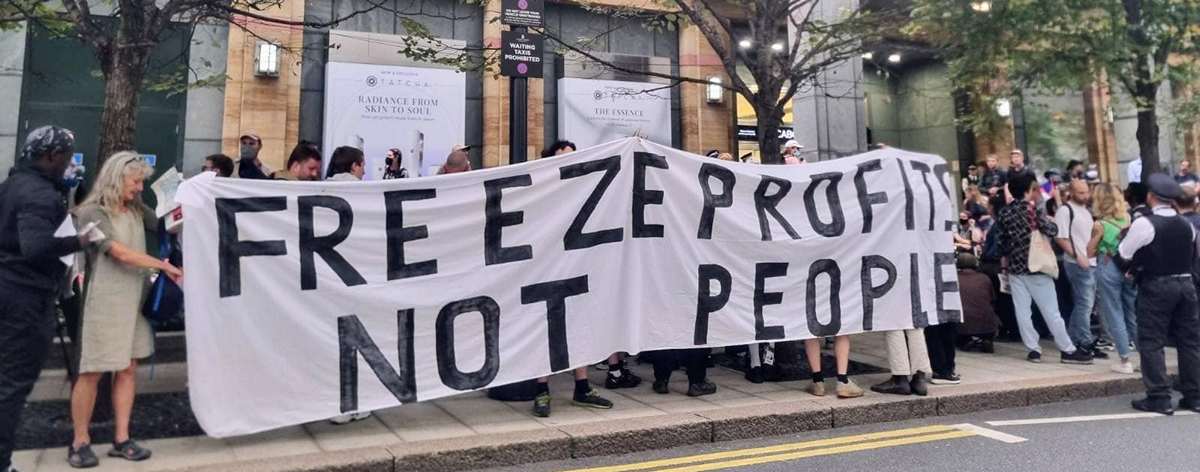
The findings tie in with recent data from the Bank of England that show credit card borrowing rose at its fastest pace in 17 years in August. Households are having to borrow more than last year; a record number of people say they are unable to save; households are cutting their spending and energy use; and more people are falling into poverty.
Peter Tutton, head of policy, research and public affairs at StepChange, a debt charity, said the "debt situation worsened in August". The government has released an energy support package, which limits yearly household energy bills to £2,500 on average, but this only came into effect this month with many already "significantly more stretched than they were a year ago", said Tutton. He added that people were "vulnerable to panic borrowing to try to fill the gap between their income and their essential spending".
Nearly half the population think they will be unable to save any money in the next 12 months, up from one-third last year, the ONS data showed. A further one-third said they would be unable to afford an unexpected but necessary expense of £850 - a measure of the risk of poverty - representing an increase of 5 percentage points since November.
Martin Beck, chief economic adviser to the consultancy EY Item Club, said consumers were being affected by many pressures. "You've got high inflation, falling real wages, you've got people with mortgages paying more interest," all of which will be detrimental to consumer spending, he said.

As many as half of respondents said they found it difficult to afford their energy bills in September, according to the ONS. Almost one-third had struggled to meet mortgage payments. Mortgage rates are expected to triple to about 6 per cent next year following further monetary tightening by the central bank.
Gabriella Dickens, economist at the consultancy Pantheon Macroeconomics, said that a boost to consumer spending from the energy support scheme was likely to be "offset by the market disruption" following the "mini-budget". Dickens expects most households to use more of their savings for debt repayments rather than spending, forecasting a 1.5 per cent contraction in household expenditure next year.
Retail sales fell steeply in August. Meanwhile, the number of new car registrations was lower in September than in the same period last year. Data showed that two-thirds of people in Britain said they had to reduce non-essential spending and gas or electricity usage, while more than two in five reported cutting back on groceries and car usage, ONS data showed.
The consumer association Which? found the number of households making adjustments to cover essential spending was at a 10-year peak. Its research showed that two-thirds of those surveyed - or 18.2mn households - had cut back on essentials, sold items or dipped into savings.
According to Google data, which tracks visits to retail and entertainment venues, numbers were down 11 per cent last month compared with February 2020. Meanwhile, spending on entertainment had fallen to 30 per cent below pre-pandemic levels, even without adjusting for inflation, according to fintech company Revolut.
Yael Selfin, chief UK economist at KPMG, said: "Consumer spending is weakening and margins are [being] squeezed, as businesses are finding it harder to pass on higher costs."

Enough Is Enough Rally, St Georges Hall Liverpool -
Photo: Liverpool Echo
Education ministers face having to cut £300 million from school budgets next year after the recent national insurance (NI) contribution rise was axed, according to a report in Schools Week.
In his "mini-budget", Chancellor Kwasi Kwarteng announced the 1.25 percentage point increase in NI, that came into effect in April, would be reversed. The increase, dubbed the "health and social care levy", was meant to raise more funding for the NHS. Schools were given extra funding to cover the estimated £300 million a year cost. The first instalment was paid this year, with future funding rolled into the national funding formula.
The Treasury confirmed department budgets will be adjusted from 2023-24. This comes as government departments have been told to prepare for cuts to enforce "fiscal discipline". School funding makes up the vast majority of the spend of the Department for Education. The Treasury said that there will be an update on school budgets in "due course". However, the DfE would not comment. This most recent attack on school funding comes after school budgets have been squeezed for over a decade, with rising costs such as soaring energy prices hitting at recent budgets. This has also affected the pay of teaching staff who are preparing to ballot on taking action to demand pay awards commensurate with the rise in inflation and a rise in the cost of living.
As an indication of the government's outlook, Simon Clarke, the "levelling-up" secretary, attacked the "very large welfare state" in The Times, adding that government departments would have to "trim the fat".
Geoff Barton, the general secretary of the ASCL leaders' union, said the government had "given away billions of pounds to promote growth, but not a penny for education". He added, "Some schools, particularly small primaries, may no longer be financially viable," predicting larger classes, cuts to subject options and widespread job losses.

The National Education Union (NEU) will ballot its members for strike action if Education Secretary Kit Malthouse does not agree to fully-fund a pay rise for teachers and support staff above the rate of inflation by October 14, reports Schools Week.
The NEU, which is currently holding an indicative ballot of teacher and support staff members over industrial action, said it would officially enter a trade dispute with Kit Malthouse if its demands are not met. It comes after schools minister Jonathan Gullis said the government was "not going to budge" on its pay offer, worth just 5 per cent for most teachers. The current CPI inflation rate is 9.9 per cent.
In a letter, the NEU said that the education secretary had until noon next Friday to give schools the funds to allow them to increase the pay of staff "at a rate greater than the rate of inflation (RPI) as at September 2022". September RPI figures have not yet been published, but the measure hit 12.3 per cent in August.
The dispute would apply to teachers and support staff working in academies and local authority maintained schools. A separate letter has been issued with a similar threat relating to sixth form college staff.

Joint general secretary Kevin Courtney said unless Malthouse agreed to the funding for a "fully funded above inflation pay increase...we will be formally balloting our members for strike action". Arguing that staff can no longer take real-terms cuts, Kevin Courtney said, "No one wants to take strike action, but education staff can no longer take year after year of below inflation pay increases which have had a major impact on the value of their pay since 2010."
The NEU has formally asked Malthouse to use his powers under section 14 of the 2002 Education Act, which allows the government to give financial assistance to schools for staff pay and to promote recruitment and retention.
Kevin Courtney urged the Education Secretary to "take this issue seriously and to act urgently". He added, "Failure to do so will ensure that we have an understaffed education system that will fail children and young people. It is in the Government's hands, and we hope for a swift resolution."
It comes after teaching union NASUWT also warned it would have "no other alternative than to ballot to support industrial action" if a better deal is not put forward.
Responding to education minister Jonathan Gullis's comments at the Conservative Party conference, NASUWT general secretary Dr Patrick Roach said it was "regrettable that the schools minister...appears to have ruled out the prospect of genuine negotiations". He continued, "Any serious approach toward negotiations must involve exploring all options, but the minister has instead insisted that the government will not budge or change its position over this year's pay award proposals. Ministers are leaving us with no other alternative than to ballot our members to support industrial action in response to the cuts to teachers' pay."

TUC London Enough Is Enough - Saturday June 18,
2022
In the context of the strike battles that are taking place, the potential for teachers and all educationalists uniquely stands as a beacon for a new direction for education. Throughout their long-persistent demands, they pose the future. In the struggle, it answers the question, "What kind of education do we want?".
The demands that cover the conditions of teachers, including pay, and the well-being of all are not considered, let alone the material and cultural requirements of the entire population. Demands such as posed by an out-of-date National Curriculum, appropriate teaching and learning, organisation of classes and tutorials, and independent learning, all are posing the alternative for society. A human-centred education, instead of capital-centred, is crucially posed and re-posed throughout recent history up to the present, where the demands have met an important zenith. Issues posed are those such as class sizes, the need to set the limits more than ever to cope with the individual and collective needs of students. Teachers need to be recruited to the proper levels to cover all circumstances with the appropriate support of auxiliary staff and assistants. Whether it is collective styles of teaching, traditional methods, layout and other forms of tuition that may be required, the teachers know the different scenarios, the teachers are the ones to control the running of the schools and the milieu in which the students receive that teaching. This is why prescriptive lessons cannot be the one-size-fits-all remedy. The teachers need to run the schools on behalf of the general population and not the state or private Academies and Trusts or other forms that have historically taken away the initiative and control by the people. The only aspect that authority, in the form of educational authority, should be required to supply is funding and advice through the experience of educators. As far as the curriculum is concerned, the people should decide on the basis of who it serves and that it is the needs and future of society itself which is the only consideration. Apart from this, there should be no special lobby attached. These questions of education being at the hub of a new society, organised on the basis of guaranteeing the rights of all, accompanying the material and cultural requirements of the masses and also workers being in control of their lives and livelihoods, all show education's unique relevance and the significance of its struggle. This is what poses itself for the future of a society based upon the human factor and social consciousness. Teachers and their unions are calling out Ofsted and that there should be no prescriptive teaching, no bureaucratic lesson planning that doesn't serve teaching and learning. Only with a human-centred education serving a humane society can the problems of discipline be tackled.
Today, the teachers, alongside parents, students, and other workers, are demanding "Enough is Enough". Society is reaching a crossroads in the state of affairs and educational demands, which are reaching their breaking point. The pressures are enormous: delivering results and exams, a diminishing staff, attacks on pensions, poor salaries that do not consider the difficulties and pressures laid upon teachers, as well as the rising cost of living - these are all factors. The running down of schools and colleges, the lack of resources and funding, and the slanderous behaviour towards them by media and Westminster politicians is a dangerous catastrophe in the making. The teachers are preparing the strategy and tactics of their struggle as the government and the elite prepare their attacks with destructive consequences. The teachers must be supported because they are dealing with the future of education right now. They are posing the alternative direction in which society must go.
Retired teacher
Receive Workers'
Weekly E-mail Edition: It
is free to subscribe to the e-mail edition
We encourage all those who support the work of RCPB(ML) to also support it
financially:
Donate to
RCPB(ML)
Workers' Weekly is the weekly on
line newspaper of the
Revolutionary Communist Party of Britain (Marxist-Leninist)
Website:
http://www.rcpbml.org.uk
E-mail:
office@rcpbml.org.uk
170, Wandsworth Road, London, SW8 2LA.
Phone: 020 7627 0599:
