
|
|
||||
|---|---|---|---|---|
| Volume 45 Number 22, August 1, 2015 | ARCHIVE | HOME | JBCENTRE | SUBSCRIBE |
Weekly On Line Newspaper of the
Revolutionary Communist Party of Britain (Marxist-Leninist)
Website:
http://www.rcpbml.org.uk
E-mail:
office@rcpbml.org.uk
170, Wandsworth Road, London, SW8 2LA.
Phone: 020 7627 0599:
Workers' Weekly Internet Edition
Freely available online
Workers' Weekly E-mail Edition
Subscribe
by e-mail daily: Free / Donate
WW
Internet RSS Feed

The Line of March Monthly
Publication of RCPB(ML) Subscribe

The Trade
Union Bill was introduced in the House of Commons on July 15 by the Secretary
of State for Business, Innovation and Skills, Sajid Javid. It is stated to
“make provision about industrial action, trade unions, employers'
associations and the functions of the Certification Officer”. This was
the Bill's 1st reading, so no debate took place at this stage. The date for the
second reading debate has not yet been announced.
Nevertheless, the workers' movement and all concerned with the right to organise and to fight effectively for the rights of all are taking the bill's threats very seriously. Last week a public meeting, “Reviewing and Resisting the Trade Union Bill”, was organised in London on July 29 by the Institute of Employment Rights (IER), the Campaign for Trade Union Freedom (CTUF), the Centre for Labour and Social Studies (CLASS) and The People’s Assembly Against Austerity.
As soon as the Bill was announced at its first reading in Parliament with its measures to impose a minimum 50% turnout – and public sector strikes would need the backing of at least 40% of those eligible to vote – the trade unions pointed out that it was aimed at making strikes almost impossible for them to organise. The BBC commentators also admitted that what was being presented in the Commons “represents the biggest shake-up in the rules on industrial action in 30 years”. It includes measures to to give employers 14 days' notice of strike action and allow them to bring in agency staff to cover for striking workers. The legislation could also cut the amount of money unions have to mount political campaigns – or donate to parties – with members actively having to “opt in” to pay the so-called political levy, which is currently automatic unless members opt-out. It also contains measures to limit the amount of facility time available for union organisation in work places making if even more difficult for workers to organise their unions to stand up for the rights and interests of their members.
The government
tried to claim that the legislation had the public behind it and Conservative
efforts to ensure strikes were only called as “a last resort” and
the Bill claims that it is “compatible” with the European
Convention on Human Rights. However, it is not hard to see through this
propaganda aimed against the worker's “right to form and to join trade
unions for the protection of his interests.”1 Also, strikes are
already “a last resort” of workers. The archaic system of postal
balloting imposed on the trade unions costs a large amount of union resources
which is not imposed on monopoly corporations and public employers when they
take measures against the interests of the workers. Then strikes are only
undertaken because workers are faced with constant attacks on their public
services and their jobs, terms and conditions of work and pensions. The
government are driving this dictatorial neo-liberal agenda of austerity without
taking account of the majority in the workplaces and in society. What the
government is aiming at with this legislation is to make it even harder for
workers to resist this agenda which is to serve the corporate elite over the
needs of all in society. The legislation has to be seen as part of the
imposition of the austerity, cuts 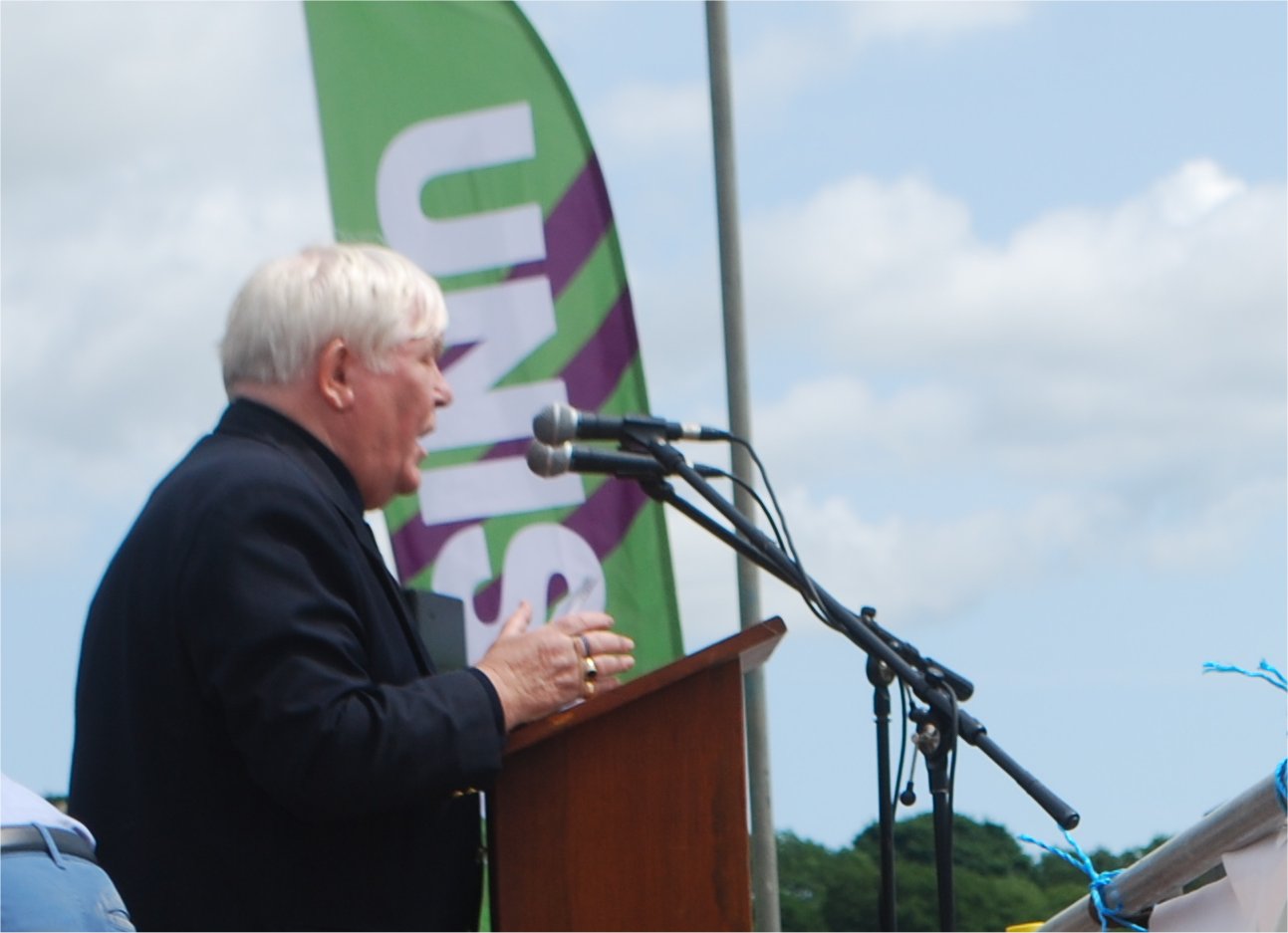
Dave Hopper speaking at the Big Meeting
and privatisation of the public sector and increased expropriation of
the wages and conditions of working people across all sectors of the economy.
By focusing on “reforming the trade unions” they are also trying to
blame this wrecking of society and of public services on the trade unions to
deflect the anger from themselves. It is the government that is attacking
democratic rights to uphold monopoly right over public right. But it wants to
turn truth on its head and claim that it is imposing “democracy”
and “human rights” on the trade unions.
This deception is at the heart of the propaganda on the Trade Union Bill. Dave Hopper, General Secretary of the Durham Miners Association pointed out at the Durham Miners Gala on July 11 that this legislation was to “shackle” the trade unions. He said: “How can a government elected by a tiny percentage of the electorate demand that a trade union ballot can only be valid if a certain percentage of people vote. It is even more hypocritical when we consider that in Parliament there are no secret ballots and no requirement for a certain percentage of MPs to vote.”
So then, when one considers that this legislation has nothing to do with democracy, or human rights and that as can be seen the ruling elite care nothing for such considerations when it suits their plans to impose austerity, what are they intending with this legislation? What really concerns them is to prevent the workers from bringing their numbers and organisation into play in their resistance against the anti-social measures that they are trying to force through. Whilst they want to present the trade unions as the ones who are abusing their power by striking to defend the public services and pensions and so on. The actual abuse of power is caused by presenting this Bill for which the government have no mandate.
It should also be noted that the provisions of the Bill will extend to both Wales and Scotland on the grounds that they are not devolved matters. Thus it can be said to further abuse the national rights of the workers and their organisations in these countries to decide how to organise their own affairs, as well as flying in the face of the recognised right of freedom of association. This is particularly so in the light of the cynical formality of the Secretary of State having to certify that the provisions of the Bill do not contravene the provisions of the European Convention on Human Rights (which is not a European Union body or declaration).

The aim of the
government, on behalf of the monopoly elite they represent, is to wipe out any
issue of organised workers having a say in anything at work and in society.
They want to stop workers being able to organise in any way while they enable
the diktat of the ruling elite to ride roughshod over the public sector
workers, further excluding them from decisions, cutting jobs, pay and
privatising services. Experience shows that already there is an offensive
against the right of trade unionists and the representatives of the workforce
to organise and speak out both in respect of the interests of the workers and
employees and in respect of upholding the public good and the interests of
society as a whole. The issue is how to build resistance and defend the
workers' organisations against this new and increased offensive.
The question then facing the working class movement is how to be effective in building the opposition to the offensive against workers organising to defend their rights and the rights of all. The Workers' Opposition has to be built on the basis of a new alternative direction for the economy and for society. There is a growing resistance to the neo-liberal austerity agenda and at the same time, the concern is widespread on how block these attempts to target the trade unions which are at the centre of the resistance. The government must not be allowed to succeed with its Trade Union Bill! All must organise and take a stand!
Article 11 of the European Convention on Human Rights
Freedom of assembly and association
Everyone has the right to freedom of peaceful assembly and to freedom of association with others, including the right to form and to join trade unions for the protection of his interests.
No restrictions shall be placed on the exercise of these rights other than such as are prescribed by law and are necessary in a democratic society in the interests of national security or public safety, for the prevention of disorder or crime, for the protection of health or morals or for the protection of the rights and freedoms of others. This Article shall not prevent the imposition of lawful restrictions on the exercise of these rights by members of the armed forces, of the police or of the administration of the State.
ShareThis
Mick Cash, RMT
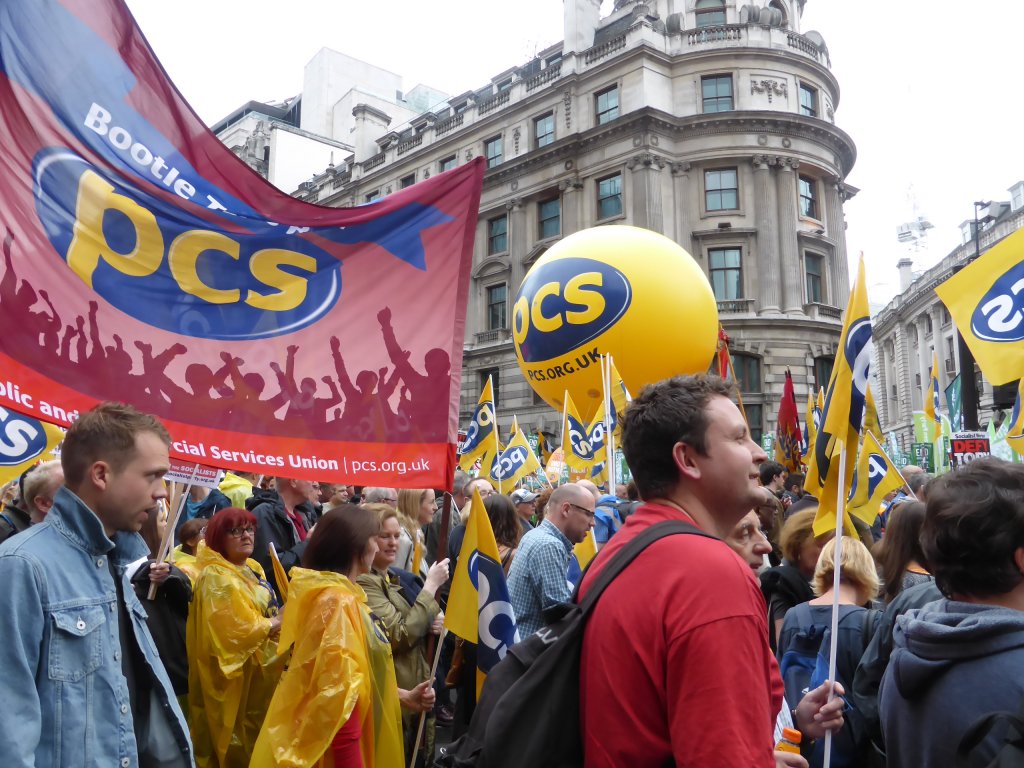
General Secretary, said: “We know that these brutal new anti-union laws
are specifically targeted at our members in the transport sector who have shown
in recent months that they have the guts to stand up and fight for jobs, pay,
services and safety. The response of this government mirrors the actions of
hard-right regimes throughout history – shackle the unions, criminalise
their members and use a raft of new laws to try and bankrupt workers'
organisations. It is not lost on us that this legislation has been tabled just
a few days before we celebrate the Tolpuddle Martyrs at their annual festival
– a group of Dorset farm labourers criminalised and exiled for
daring to organise a union. The trade union movement will unite to fight this
brutal assault on the most basic of human rights and that campaign will be
taken into the communities who stand to lose access to safe and reliable
services as this noose of the anti-union laws is twisted round our
necks.”
Mark Serwotka, General Secretary of PCS, who spoke at the public meeting and whose government employee members have already been subject to removal of union facility time pointed out that it is rank hypocrisy to introduce arbitrary restrictions on union ballots. He emphasised that they will have no legitimacy when they scrape through parliament on a wafer thin majority. He said: “We have repeatedly asked ministers to work with us to make it easier for people to vote in workplaces and using technology, and they have refused. This is not just an attack on trade unions, it is an attack on society as a whole, as we know that weaker unions mean greater inequality.”
Carolyn Jones,
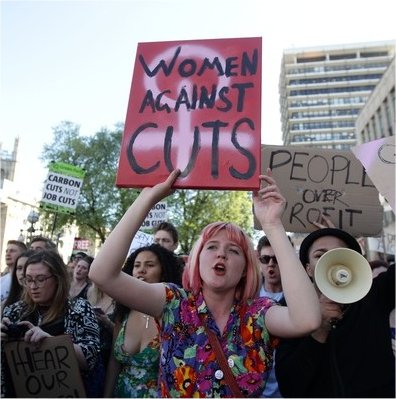
Director of the Institute of Employment Rights (IER), who also spoke at the
public meeting, said: “This is a blatant attack on the rights of workers
and the freedoms of trade unions. The proposals on strike action will impose
impossible thresholds for the majority of trade unions under our archaic, over
restrictive and increasingly expensive balloting procedures. And for what?
People increasingly understand that it is the government’s austerity-led
cuts that are undermining our public services not trade union action. Yet here
we have a government elected by less than 25% of the electorate imposing voting
thresholds on trade unions that have already been declared in breach of
international law. The ideology behind these proposals needs to be exposed and
the government plans resisted.”
Matt Wrack, FBU General Secretary, said: “The Tories are trying to steam-roll over the democratic rights and civil liberties of workers in the UK today. Firefighters, ambulance workers, tube workers and others were praised last week for their response to the London bombings on 7/7, but this week the Tories are planning to attack their rights at work. This has nothing to do with the voting threshold as the Tories claim. It is all about weakening all trade unions and workers' rights so that bosses can attack wages, pensions and conditions at work. And this coming from a government who have been voted into office on the support of just 24% of the public.”
Ronnie Draper,
BFAWU (Bakers, Food and Allied Workers Union) General Secretary, said:
“This is another example of the Tories' sheer contempt for workers'
rights. It's OK for an MP 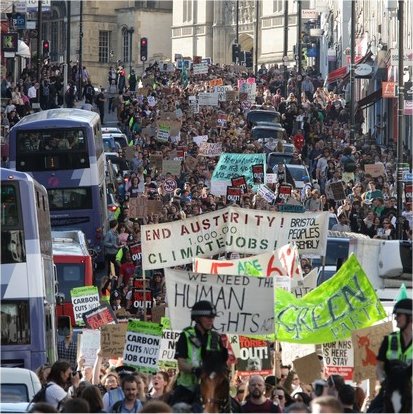
to be elected on
figures way below 50% of the electorate but not for workers to determine their
futures unless they hit the 50% threshold. This is a sad day for workplace
justice, but one that will strengthen the resolve of those fighting against
oppression.”
Michelle Stanistreet, NUJ General Secretary, said: “Forget the language of fairness and rights being peddled by the Tories – this is the most cynical of attacks designed to finish what Margaret Thatcher started and enable a Conservative government to destroy the trade union movement. These are not reforms, they are draconian measures intended to strip workers of a voice at work. Preventing people from taking action by weighing them down in needless bureaucracy and giving employers ever greater powers will only mean that it will become inevitable that workers will have to set aside the law to properly defend their rights and working conditions. This is a foolish fight for the Tories to pick, but it’s one that the trade union movement won’t duck from.”
Ian Lawrence, Napo (Probation and Family Court staff union) General Secretary, said: “It is ironic that a government, elected on 25% of the popular vote is obsessing itself with further attempts to create a climate where trade unions are blamed for the shortcomings of employers and for having the temerity to stand up to exploitative working practices. This government ought to be focusing on how it can work with trade unions to create employment opportunities especially for younger people, and democratise society by way of online balloting for political elections as well as those on key industrial issues.”
(Trade Union Co-ordinating Group)
ShareThis

Meeting at NUT's Mander Hall, central
LondonTrade unions, MPs and workers' movement
organisations came together at the packed meeting on July 29 – it was
standing room only – at the NUT’s Mander Hall in central London to
question the legislation and discuss how to intervene to try to stop the bill.
The meeting also addressed what must be done if the bill becomes law. Speaker
after speaker stressed that there must be unified resistance to the bill and
that far from being irrelevant trade unions are too important and their support
too strong to allow the attacks to succeed.
PCS general secretary Mark Serwotka was among the speakers at the meeting organised by the Institute of Employment Rights (IER) together with the Campaign for Trade Union Freedom (CTUF) and the Centre for Labour and Social Studies (CLASS). Mark Serwotka told the meeting of more than 1,000 people that all have to mobilise against the bill.
“We have to debate what we are going to do if this bill becomes law,” he said. “The first strike when they try to break a picket we should bus in tens of thousands of people.”
Unite general secretary Len McCluskey spoke of how, if needs be, the unions will have to break the law to oppose government attacks on trade union rights. “The time for rhetoric will quickly disappear. Our moment is here. And if necessary we will need to defy the law,” he said.
John McDonnell MP, chair of the PCS parliamentary group, said the secret of success in fighting the government is solidarity. “Those who protested at Canary Wharf to get that construction worker (Graeme Smith) his job back – that’s how to fight,” he said.
There was sustained applause for sacked PCS National Gallery rep Candy Udwin as she got up to speak to outline how she and members at the gallery had taken more than 50 days’ strike action against privatisation and were preparing to keep fighting.
Chair of the IER, John Hendy QC, was clear that the bill would not be defeated by lawyers. “The trade unions must mobilise as in the past,” he said.
Unison general secretary Dave Prentis was unequivocal about challenging the bill: “This bill is an attack on democracy. The whole trade union movement have to sign up in blood to oppose this bill. If we don’t kill this bill through parliament we must go to European courts.”
Speakers urged everyone to join the TUC rally at the Tory Party conference in Manchester on October 4 and the anti-austerity demonstration outside parliament on the day of the spending review on November 25 when the government plans to outline a further £20 billions of cuts.
(Campaign for Trade Union Freedom)
ShareThis
Legal Background
In form, the Bill amends the Trade Union and Labour Relations (Consolidation) Act 1992. This Act brought together all the restrictions on the activities of trade unions introduced by the Thatcher government. It is predicated on trade unions being involved in negotiating free collective bargaining arrangements, laying down conditions for a union to be so recognised by employers. By organising industrial action (in breach of the employment contract), the union would become legally liable for damages unless statutory immunity were given. This has been the legal context of the struggle of the workers from the early days of trade unions. It was one of the spurs to the formation of the Labour Party over a century ago so that the organised workers could have a voice in Parliament. The 1992 Act placed restrictions on that immunity unless:
• the action is in contemplation or furtherance of a trade dispute,
• the union has the support of a valid ballot and has sent the appropriate notifications to union members and the employer,
• the action does not amount to secondary action or unlawful picketing, and
• it is not for a prohibited purpose, for example to support employees dismissed during unofficial industrial action.
Some of the provisions of the Bill
Currently, the 1992 Act requires a simple majority for a ballot conducted by a trade union for industrial action to be successful. There are no requirements for any level of turnout. Clause 2 of the Trade Union Bill introduces a new requirement that in all ballots for industrial action, at least 50% of the trade union members entitled to vote must do so in order for the ballot to be valid. Whether or not the ballot is successful and creates a mandate for industrial action is unaffected: a simple majority (i.e. more than half) of the votes cast must be in favour of industrial action in order for action to go ahead.
Clause 3 defines important public services as covering health, education, fire, transport services, decommissioning of nuclear installations and management of radioactive waste and spent fuel, and border security. In order for a ballot in important public services to lead to industrial action, a trade union must obtain the support of at least 40% of all union members entitled to vote in the ballot. This threshold is in addition to the 50% participation threshold introduced by clause 2. This applies where a majority of those balloted are workers who provide, or do work that is ancillary to the provision of, important public services. An example of ancillary work, in relation to health services, might be work done by hospital cleaners or technicians.
Clause 4 places further requirements on what must be included on a ballot paper. At present the ballot paper must specify whether the action is strike action or action short of a strike. The Bill would now require a trade union to state in the ballot paper the detailed nature of the issues that are in dispute between the employer and trade union and that have resulted in the ballot being called and be sufficiently detailed to enable the union member who is voting to understand what issues remain unresolved. It would also require a trade union to specify in the ballot paper the type or types of industrial action that amount to action short of a strike and to provide an indication of the time period during which it is proposed that those specific types of action are to take place.
A trade union must provide an employer with notice of industrial action after it has secured a ballot mandate and before any such action is taken. Clause 7 extends the period of that notice from the current seven days to 14 days.
Clause 8 removes the current requirement that there must be some industrial action within a period of four to eight weeks following a ballot in order for the mandate to remain valid, and replaces it with a provision that the members’ agreement to a union’s proposed industrial action will automatically expire four months after the date of the ballot.
Clause 9 lays down that trade unions must comply with additional requirements when picketing. A failure to comply with these requirements will mean that a trade union and its members will not be protected from legal proceedings which claim that they have induced someone to break their contract or interfered with a person’s performance of a contract.
Currently members of a union automatically contribute to a union’s political fund, unless they actively take a decision not to contribute. Once members are contributing to a political fund, they continue to do so until they decide to give an exemption notice to the union, confirming that they no longer wish to contribute. Clause 10 reverses this process and provides that a trade union member must make an active decision to opt in, by way of a written notice to the union, in order for the union to be able to collect monies from those members for the political fund. A member may continue to contribute to the political fund until either the member chooses to withdraw their agreement to contribute by sending a written notice to the union or the decision to contribute automatically lapses unless renewed.
Clause 11 requires trade unions to provide information about their political expenditure in their annual return to the Certification Officer.
Clause 12 enables a Minister of the Crown to make regulations requiring some or all public sector employers with one or more trade union representatives to publish information relating to time off taken by those representatives for trade union duties and activities (referred to as “facility time”). The information that could be required to be published includes the number of such representatives by type, how many of them spend a specified percentage of their time on trade union duties and activities, and information about the employers’ spending on trade union duties and activities.
Clause 13 allows a Minister of the Crown to limit the paid time off taken by the employers' trade union representatives for facility time to a percentage of the representatives' working time. For example, if a public sector employer employs a number of trade union representatives who spend 100% of their working time on facility time, the cap may limit the time spent by such trade union representatives to 50% of the working time. Alternatively or in addition, the regulations may cap the percentage of the employers' pay bill that is for facility time.
(reference: Explanatory Notes prepared by the Department of Business, Innovation and Skills)
ShareThis