
|
|
||||
|---|---|---|---|---|
| Volume 44 Number 9, March 29, 2014 | ARCHIVE | HOME | JBCENTRE | SUBSCRIBE |
Weekly On Line Newspaper of the
Revolutionary Communist Party of Britain (Marxist-Leninist)
Website:
http://www.rcpbml.org.uk
E-mail:
office@rcpbml.org.uk
170, Wandsworth Road, London, SW8 2LA.
Phone: 020 7627 0599:
Workers'Weekly Internet Edition
Freely available online
Workers' Weekly E-mail Edition
Subscribe
by e-mail daily: Free / Donate
WW
Internet RSS Feed

The Line of March Monthly
Publication of RCPB(ML)Subscribe
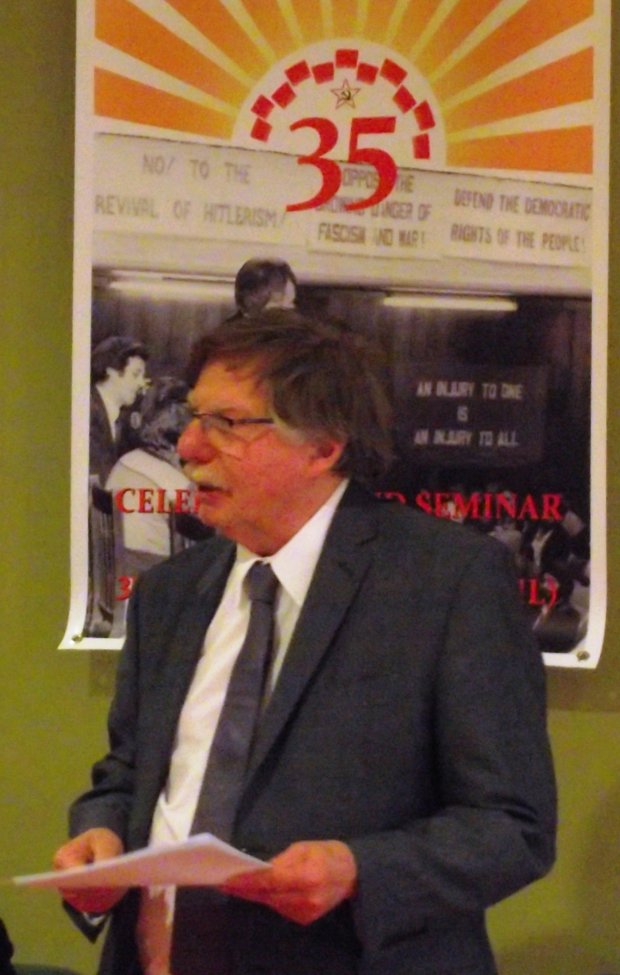
Michael Chant , General Secretary of
RCPB(ML)The Revolutionary Communist Party of Britain
(Marxist-Leninist) held a very successful seminar and celebration on March 16,
marking the 35th anniversary of the Party. The seminar had the theme of
learning from the example of John Buckle and the work to found the Party and
lead the movements of the working class and people.
In the keynote speech, Michael Chant, General Secretary of RCPB(ML), said that the Party did not spring up from nothing. In terms of organisation, it had its precursor organisations. But it did not come from a split with any other force – it had its roots in dealing with the necessities of the times. Crucially it addressed the necessity in the 1970s of establishing a Marxist-Leninist revolutionary party, breaking with all the old prejudices of the past, or what can be called the old conscience of the society.
In assessing and celebrating the 35 years of the history of RCPB(ML) and its achievements and the work and sacrifices of all its comrades and its sympathisers, what is the reference point? It is based in the necessities of the present, not from controversies from the past. What we are arguing, our thesis of these 35th anniversary celebrations and discussions, is that it must be what the times are calling for today. We are arguing for the necessity of building the Party in the 21st century as decisive not just for the victory of some struggles of the working class and people, but specifically to break with all that is holding back the progress of society, to challenge the old culture and social forms based on property relations and the privileges based on the supremacy of the private ownership of the means of production, and the political processes and institutions that go with that economic organisation of society, which in the present times has become so criminal, parasitic, anti-human, incoherent and irresponsible.
The crux of the question that the seminar is addressing and inviting everyone to consider, discuss and elaborate, is what kind of Party is it that the times are calling to be built and strengthened in the 21st century, at this juncture of history. There is a revolutionary red spine and red thread running from the founding of the Party in 1979 and before, in its roots in the revolutionary and anti-imperialist movements of that time, to RCPB(ML) and its revolutionary activities and analysis today. It is essential, we hold, to look at the work that led to its founding and its revolutionary work of that period, from the perspective of the present. In particular we are calling for the study in an organised form of the example of John Buckle and the work of the Party which he led.
Why do we hold that this is necessary? It is not from nostalgia or to say that the Party was more revolutionary in those days. We do recognise the outstanding qualities of John Buckle, and that is why so much emphasis is being given to his example and inspiration. But it is also to recognise that these outstanding qualities were put in the service of the work of the Party, and to lead the struggles of the working class and people in the form which was necessary at that time. In fact, it can be said that the work of that time took place in the context of the inter-imperialist machinations of the Cold War, of the bipolar division of the world, of anti-communist rhetoric, slander and historical falsification. The task now is not to keep fighting those old battles which that period has settled. But the issue which presents itself is that the rich and powerful of the imperialist system of states today and the media which they control or which are their mouthpieces rehash and intensify Cold War propaganda against the revolutionaries, Marxist-Leninists, and generally against all the progressive movements of those times. The state attacked and denigrated them as violent and extremists then, and it is doing so now.
The task as it presents itself today in the context of the focus of our celebrations is to recognise this legacy objectively and to hold it high and carry it forward. In a few words, it is to ensure that the legacy lives on today in the work to renew all the arrangements at the base of society, provide society with a new economic direction that serves the public good and empowers the working class and people, and ensure that all the political and social institutions are human centred, not capital centred and serving the interests of the monopolies and the financial oligarchy as at present. The task in defending and carrying forward this legacy is also to show in theory and practice what is Marxism-Leninism, as the caricatures, distortions and disinformation, as well as its dogmatic rendering, serve only to, and have the intention of, disorientating those forces who are today seeking serious solutions to serious problems. Today, for instance, there is propaganda against and criminalisation of those engaged in political activity and fighting for rights and for social change. “Revolutionary communism” is linked with “Islamic fundamentalism” in order to create the impression that both are cults and extremism which should be targeted by the state and made the targets of the “war against terrorism”. At the same time, provocateur activities are carried out both to entrap certain forces and also to attempt to discredit the Marxist-Leninists and social activists. At the height of the time John Buckle became active also, the US and British secret agencies were carrying out such activities as engaging in violent actions which they blamed the Marxist-Leninists for, as well as launching coups and horrible crimes against the people who were demanding democracy and human rights. Our Party and its forerunner organisations were no stranger to these state-organised attacks, the planting of explosives, the attacks by the police when it was the comrades who were branded as “violent”. These days the powers-that-be carry out attempts to discredit and criminalise those who are fighting for rights and against the anti-social offensive. Their aim is to fragment and disorientate the political movements, sow doubt and distrust, and try and prevent the broad front uniting and growing against the so-called “austerity agenda”.
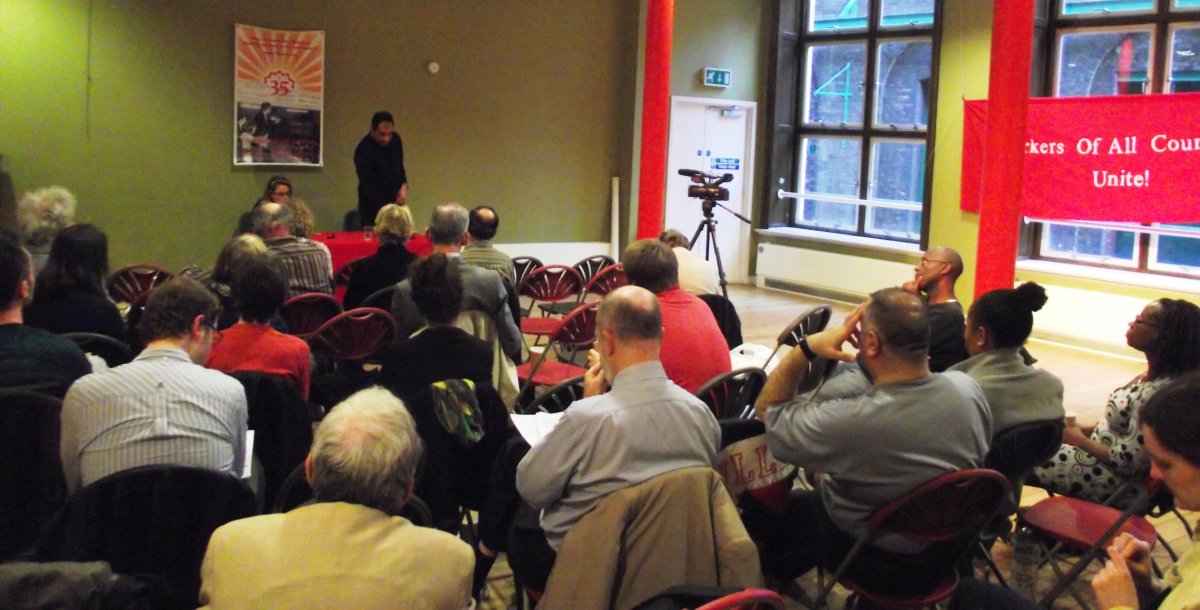
Seminar and celebration on March 16
The Party organises the people to be history-making. The Party always
addresses the necessity to be on a par with the needs of the times, with the
requirements of the movements of the working class and people, with the demands
of history. At this time of the celebration of the Party’s 35th
anniversary, it is aware that there is a renewed interest in communism, in the
necessity for organisation, consciousness and leadership as the way forward,
and not only of the presentation of the ideology of communism, but how
communism is linked with the solutions of the problems that the sections of the
people are facing in their daily lives. One reason for this interest is the
realisation that these problems are linked with the organisation of society,
its social and economic base and its class composition.
But there is an interest which goes beyond this realisation. It is that a crucial necessity of the times is to build a Party of modern communism, a mass communist party, itself as what the times are calling for at this juncture of the 21st century. We refer to a Party of modern communism meaning that this is a Party which is bringing communism on a par with addressing and solving the problems of the 21st century. If communism does not do this, what kind of communism would it be? It has to be consistent not only with the objective conditions but consistent with the tasks of the time to overcome them. This means that it fights that the working class should take up its own programme to chart a way out of the crisis, take the stands which are in its own interests and that of the society as a whole, and delineate the alternative. We refer to a mass communist party, meaning its quality of the participation in its democratic centralism. In other words, its members are duty bound to be conscious participants in arriving at decisions and be conscious participants in implementing them. But its implications are for the whole of the Party’s organising work. Its method of work is to mobilise the people in the objective movements to themselves be active in setting the agenda, based on the interests of the movement, and themselves to follow the principles of conscious participation in arriving at decisions in order to be conscious participants in implementing them. Such a method of work is aimed at empowering the participants in the movements of the working class and people to work out how to take a stand which favours their interests within the situation they are addressing.
We think that this method of work is key to overcoming the old and facilitating the rise of the new. It is certainly key to the vitality of the Party and ensuring it rises to meet the challenge of the times. The Party’s call for this 35th anniversary, to build such a Party in the 21st century, is a call for all who are actually in motion, who are looking to strengthen the organisation and resistance of the working class and people’s movements. The issue is that the ruling circles have concentrated so much political and economic power in their hands that they have the potential to and are unleashing great tragedies not only abroad but also at home.
So our reference point is the work of the Party in the 21st century. The Party has its vision for a new society, which is neither a truism nor a utopia, but, like the solution of any scientific problem, involves the practical application of sound theory. To bring this about is political work.
Other papers presented to the seminar dealt with the Party’s history of struggle and emphasised the strength of the Party’s line in the present. The 35th anniversary event was pervaded with the spirit of the Party of John Buckle in the here and now. There was a sense that it was a stepping stone, a springboard, to something new, establishing the reference point from which to redouble the work.
This was also captured in the important film which was produced for the occasion, which all found very moving as well as informative.
Messages were received from Sandra Smith, First Secretary of the Communist Party of Canada (Marxist-Leninist), from the US Marxist-Leninist Organisation, from the Central Committee of the Workers’ Party of Korea and from the New Communist Party of Britain.
The concluding remarks of the seminar emphasised the role of the Party in uniting all the movements of the working class and people in the struggle for the empowerment of the working class and vesting sovereignty in the people. The call was given to join in the work to build RCPB(ML) as a mass communist party and as the decisive subjective factor in bringing about its vision for a new society, overcome all the old prejudices and contribute to building a bright future for humanity.
The celebrations in the evening engaged everyone in discussion, and the evening was rounded off with a rousing cultural programme, and the second showing of the Party’s film.
(to be continued)
ShareThis
Budget 2014:

The budget
should be condemned for its brazen declaration that not only is austerity to
continue, but it will be intensified and continued indefinitely. Presenting the
budget to parliament, Chancellor George Osborne stated quite openly,
“Securing Britain’s economic future means there will have to be
more hard decisions; more cuts...”
“So I can confirm that in addition to the cuts this year and next, there will be cuts in the next Parliament too,” he declared. There will be “difficult decisions on public service pay and pensions. Further savings in departments. A cap on welfare bills.”
“To lock in our country’s commitment to this path of deficit reduction we will seek the support of Parliament in a vote,” Osborne announced. Given the lack of a modern constitution enshrining the individual and collective rights of the people, legislation will be passed to give effective constitutional force to monopoly right over social programmes and public services.
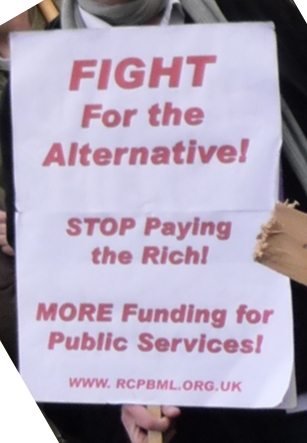
Osborne
therefore also announced that he will institutionalise austerity by bringing
forward a new Charter for Budget Responsibility this autumn. In this way, the
government hopes to set up new state arrangements of austerity, to ensure that
this is a path that the economy will be locked into indefinitely, and that the
entire Treasury be administered in the interests of the financial oligarchy and
the monopolies.
Part of the same austerity agenda is the accelerated introduction of market forces into social programmes and public services, which not only open up these sectors for plunder, from which the monopolies drain value as they extract maximum profit, but also neutralises the power of any public authority that would be able to restrict monopoly right.
For example, the budget also included changes to pensions, which, as has become usual, will create even more market-forces in this crucial area under the guise of allowing personal choice. The idea is that people will no longer be required to purchase an annuity on retirement, but may draw on their pension pot as they choose at that time. The view is entirely capital-centric. The issue here is neither “personal choice” over one’s individual “pension pot”, nor whether one should be forced to put that “pot” into the hands of a private financial institution in the form of buying an annuity, but that pensions are a necessary claim on the social product and that a standard of life from birth to death is a right that should be guaranteed.
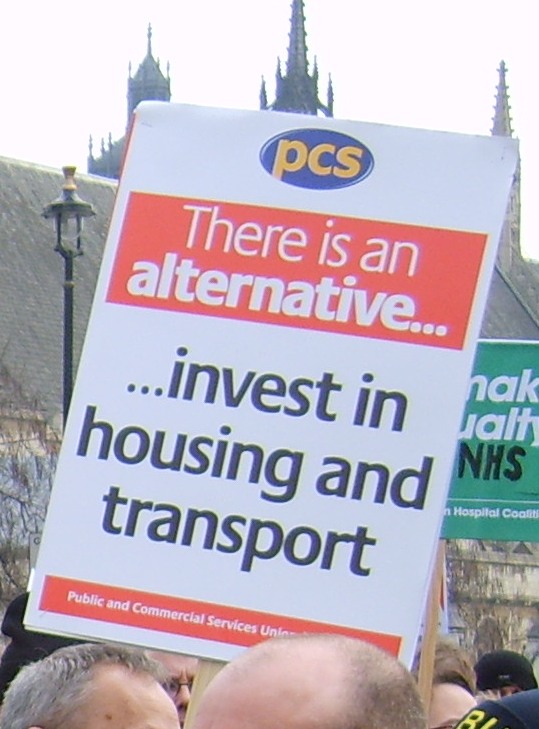
Workers must
break with the capital-centred dogmas that underlie the budget. This requires
serious discussion on changing the direction of the economy to lay their claim
to the added value that belongs to them. A human-centred alternative is
necessary
One big source of distraction is the way in which the parties in power and opposition use the budget as simply another mechanism in their collusion and contention for power. This is particularly the case as we enter the last year leading up to the general election in 2015.
So as expected, the budget included various sops, such as a slight lowering of income tax through the raising of tax thresholds. This has been combined with media hype over opinion polls and the weak response of Ed Miliband in parliament. This is a diversion designed to prevent the working class working out its own independent programme.
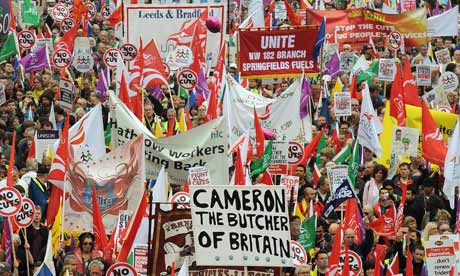
In addition,
the budget is also being used to manipulate this year’s Scottish
independence referendum through the transfer of powers to raise income tax to
the Scottish parliament, in an attempt to derail the campaign for the Scottish
people to create the conditions for exercising their right to sovereignty.
The big parties should be condemned for their cynical use of the budget for electoral purposes. Instead, workers should organise for a change in the direction of the economy to one that puts the claims of the working class and society as a whole in first place, and in so doing, raise themselves to the level of worker-politicians, as part of building an organised Workers’ Opposition to the rule of the big parties and monopoly right.
ShareThis

NHS England, the
government’s national NHS commissioning body, has admitted, according a
report in the Health Service Journal (HSJ)
1, that £650 million of provisions made by
Primary Care Trusts last year to pay for “historic continuing health
claims” has been “returned to the Treasury and used to reduce the
national budget deficit”.
Primary Care Trusts (PCTs) have been superseded by Clinical Commissioning Groups (CCGs) under the provisions of the Health and Social Care Act as the commissioning bodies for health care. According to the HSJ, “During 2012-13 PCTs made provisions totalling £800m to pay for financial liabilities expected to arise in future years. Of that, £650m related to retrospective continuing healthcare claims. However, it has now emerged that CCGs will not be able to access any provisions set aside by their predecessors, meaning future continuing healthcare payouts will be funded from CCG allocations.” The HSJ reports, “NHS England has admitted that £650m of provisions made by primary care trusts last year to pay for historic continuing healthcare claims will not be available to clinical commissioning groups. Commissioners are now asking why their predecessor organisations were required to set aside the huge sum – which was intended to ensure CCGs did not come into being with inherited ‘legacy debts’ – if it was not going to be available in future years.”
The HSJ report continues, “The provisions were set aside by PCTs after promises by former health secretary Andrew Lansley that CCGs would have no ‘legacy debts’ inherited from their predecessor organisations.” NHS Clinical Commissioners co-chair Steve Kell said, according to the same report, “We should ask why PCTs were asked to make provisions in 2012-13 if the money couldn’t be used in future years under Treasury accounting rules.”

Striking Doncaster Care Workers. Photo: A
Tice It is already been estimated that in 2014-15
£250m will be topsliced from CCG budgets to cover anticipated costs of
settling the backdated care claims this year. In 2013-14, NHS England has paid
out £88m for retrospective continuing healthcare claims on behalf of
CCGs. The HSJ article reveals that an accountancy trick was used by the
government, in the form of the treasury rules, to appropriate the money. A
letter from NHS England’s director for commissioning development, Ros
Roughton, to CCGs’ representative body NHS Clinical Commissioners of
March 18 said, “Under Treasury accounting regulations the payment of
legacy provisions count against the NHS budget only when they are actually
paid.”
Continuing health care claims are claims which resulted from the deadline that the government set in 2012 for anyone wanting to claim backdated NHS continuing health care for care received in private nursing, or care homes between 2004 and 2011. This resulted in 60,000 claims mainly for elderly patients in private nursing homes who had to pay for their health care out of their savings, by selling their homes and all their assets, if their savings were above £23,250 (currently).
At the end of the 1980s, at the time NHS elderly care hospitals were closed and private care homes opened, the government ended the right to “social care” for anyone requiring long term care, forcing thousands of people and their families to sell their homes and give up their savings to pay for their long-term social care. It also in effect ended their right to health care which was supposed to be funded by government. This was one of the most inhuman anti-social measures taken by post-Thatcher governments over the last 30 years. Since that time, many families have challenged this decision on behalf of their elderly relatives in the courts and some of the successful cases have been reported, such as the Coughlan case in 1999 and the Grogan case in 2006, which upheld the ruling that costs due specifically to the “health care” element should have been funded by government. But this did not completely overturn the “social care” costs still paid for out of savings.
In 2010, the then Labour government instead of taking responsibility to restore the right to social and health care for all set up an “independent commission” on care costs. In 2011 this independent commission, led by the economist Andrew Dilnot, recommended a cap on all social care costs that should be between £25,000 and £50,000 and specifically recommended that figure be £35,000. The present government’s Care Bill currently going through Parliament has increased that cap to £72,000 but it will not be introduced until April 2016.

With regard to
the retrospective claims, the present Coalition government has turned the issue
into only allowing people eligible to make retrospective claims for
“health care costs” before defined cut-off dates in 2012 and 2013,
which were different for England, Scotland, and Wales. In the north of Ireland,
they gave no right for these retrospective claims. These are the
“historic continuing health care claims” that have been estimated
at £650 million. But this estimate is not necessarily the amount that
will be paid to elderly residents or their families. On the contrary, only
patients and their families who knew that they may be entitled to claim lodged
their claims in time mainly through no-win no-fee solicitors. Yet the
government has been paid for the full amount of the estimated claim that it
should have, and could have, refunded as of right. Add to this the estimated
£20 billion and rising funds that the government is taking from the NHS
budget to fund the rich financial oligarchy and monopolies over the interests
of the people and their health in the name of “austerity”. It is
also robbing the income of health care workers by refusing to fund even
inflation rises over several years.
Such a direction highlights that the agenda of the NHS is one of appropriating wealth in favour of private monopoly interests under the fraudulent guise of “reducing the deficit”. It underlines that the working class and people themselves must be empowered to set the agenda. This is a struggle which health workers are taking up to resist being excluded from decision-making. The fight is to recognise the right to health and social care for all. The anti-social direction for the NHS represented by the Health and Social Care Act, the Care Bill and indeed preceding legislation must be changed to a pro-social direction.
No to
the Government Funding Scams Designed to Pay the Rich!
Fight for a Pro-Social Direction to the Health Service!
1 Treasury claims £650m legacy debt pot - 27
March, 2014 | By David Williams
HSJ -
http://www.hsj.co.uk/news/finance/treasury-claims-650m-legacy-debt-pot/5069300.article
ShareThis