
|
|
||||
|---|---|---|---|---|
| Volume 41 Number 21, July 9, 2011 | ARCHIVE | HOME | JBCENTRE | SUBSCRIBE |
127th Durham Miners Gala and Big Meeting:
Workers' Weekly Internet Edition: Article Index :
Build the Workers’ Opposition! Fight for the Alternative!
Central London March to Defend the NHS from Cuts and Privatisation
NHS future Forum:
An Attempt to Placate Opposition and Manipulate Opinion
Weekly On Line Newspaper of the
Revolutionary Communist Party of Britain (Marxist-Leninist)
Website:
http://www.rcpbml.org.uk
E-mail:
office@rcpbml.org.uk
170, Wandsworth Road, London, SW8 2LA.
Phone: 020 7627 0599:
Workers'Weekly Internet Edition
Freely available online
Workers' Weekly E-mail Edition
Subscribe
by e-mail daily: Free / Donate
WW
Internet RSS Feed

The Line of March Monthly
Publication of RCPB(ML)Subscribe
127th Durham Miners Gala and Big Meeting:
Statement of the Northern Region of RCPB(ML)
 This year’s Durham
Miners Gala and Big Meeting comes at a time when the working class movement is
once again stepping up the class struggle in Britain to defend all of the
rights of the people, which are coming under attack from the Conservative and
Liberal Democrat coalition government. One of the important roles that the Gala
will play at this time is that the working class and people of the North East
are coming together in their thousands to meet and discuss how to further build
the workers’ opposition and elaborate their fight for an alternative
direction for society.
This year’s Durham
Miners Gala and Big Meeting comes at a time when the working class movement is
once again stepping up the class struggle in Britain to defend all of the
rights of the people, which are coming under attack from the Conservative and
Liberal Democrat coalition government. One of the important roles that the Gala
will play at this time is that the working class and people of the North East
are coming together in their thousands to meet and discuss how to further build
the workers’ opposition and elaborate their fight for an alternative
direction for society.
The building of the opposition and the fight for the alternative took an important step forward when, on March 26, thousands travelled to London from the North East, where more than 500,000 marched for the alternative. Then on June 30, three quarters of a million teachers and public service workers went on strike all over the country for the alternative against the plans of the government to rob the pensions of the public sector workers. In taking this stand, the public sector workers are defending the dignity of labour and the interests of the whole of society. Public sector workers, irrespective of political outlook, are acting as a collective, discussing the issues, supporting one another and developing their social consciousness. Their struggle not only defends their own interests but also the general interests of society.
 The government, with a cabinet itself made up of millionaires,
is bending over backwards to accommodate the dictate of the big banks and
monopolies over the economy at the expense of the interests and well-being of
the people and continuing to extend their criminal wars in Afghanistan and now
to Libya on which it spends vast sums. Alongside the US, France, Israel and
other NATO countries, Britain is acting as the centre of backwardness in the
world, riding roughshod over the demands of the people and the vast majority of
countries for a peaceful resolution of conflicts, whilst at the same time, the
government is attacking its own people at home and playing the racist card over
immigration to try and divide and weaken the people’s opposition.
The government, with a cabinet itself made up of millionaires,
is bending over backwards to accommodate the dictate of the big banks and
monopolies over the economy at the expense of the interests and well-being of
the people and continuing to extend their criminal wars in Afghanistan and now
to Libya on which it spends vast sums. Alongside the US, France, Israel and
other NATO countries, Britain is acting as the centre of backwardness in the
world, riding roughshod over the demands of the people and the vast majority of
countries for a peaceful resolution of conflicts, whilst at the same time, the
government is attacking its own people at home and playing the racist card over
immigration to try and divide and weaken the people’s opposition.
When many workers look to the Labour Party, they see that it is in crisis, unable to redefine itself in the new situation, having been, and continuing to be, part of the same anti-social and pro-war consensus at Westminster over many years and unable to present itself as a credible alternative. What is new is that the consciousness that is emerging in the working class movement is that it is the workers that must constitute themselves as the opposition. What is key is that this movement is built and strengthened so that working class can constitute itself the nation and vest sovereignty in the people. The youth and students are also playing a very important and decisive role in their struggle that education is a right and to turn this situation around so that it favours the working class and all the oppressed sections of society.
 What
must be the next step? What is on workers’ minds is how their struggle
for the alternative can be effective. This demands the conscious participation
of each and all in the workers’ movement. The times demand that the
workers build their opposition and become organised as an effective independent
political force in their own right. It is this question that demands serious
discussion here at the Gala and in the future. Such a mass working class
movement points to the crucial requirement for the workers to give rise to
their own worker-politicians, who oppose the monopoly dictate and become
champions of a human-centred society. Such a movement can give rise to a
genuine mass party in the future which has the aim of democratic renewal of the
political system, politicising and enabling the people to raise their level of
participation in the political life of the country and ending the domination of
the big-party cartel at Westminster. Its demands will need to centre
around: an economy that guarantees the right to a livelihood; safeguarding the
NHS as a publicly-provided National Health Service with an end to
privatisation; an end to the barbaric wars and the bringing of the troops home
from foreign soil and withdrawal from NATO; education provided as a right and
not a privilege; respect for the natural environment in the interests of human
existence; not-for-profit banking, credit and insurance under direct public
control; public ownership of industries fundamental to the social economy; a
peaceful social environment in which the national economy is developed not to
serve maximum profit of the rich who take more out of the economy than they put
in, but to serve the claims of the people on society. Such a programme can be
summed up as: Stop Paying the Rich! Increase Investments in Social
Programmes!
What
must be the next step? What is on workers’ minds is how their struggle
for the alternative can be effective. This demands the conscious participation
of each and all in the workers’ movement. The times demand that the
workers build their opposition and become organised as an effective independent
political force in their own right. It is this question that demands serious
discussion here at the Gala and in the future. Such a mass working class
movement points to the crucial requirement for the workers to give rise to
their own worker-politicians, who oppose the monopoly dictate and become
champions of a human-centred society. Such a movement can give rise to a
genuine mass party in the future which has the aim of democratic renewal of the
political system, politicising and enabling the people to raise their level of
participation in the political life of the country and ending the domination of
the big-party cartel at Westminster. Its demands will need to centre
around: an economy that guarantees the right to a livelihood; safeguarding the
NHS as a publicly-provided National Health Service with an end to
privatisation; an end to the barbaric wars and the bringing of the troops home
from foreign soil and withdrawal from NATO; education provided as a right and
not a privilege; respect for the natural environment in the interests of human
existence; not-for-profit banking, credit and insurance under direct public
control; public ownership of industries fundamental to the social economy; a
peaceful social environment in which the national economy is developed not to
serve maximum profit of the rich who take more out of the economy than they put
in, but to serve the claims of the people on society. Such a programme can be
summed up as: Stop Paying the Rich! Increase Investments in Social
Programmes!
 At the
127th Durham Miners Gala, the Northern Region of the Revolutionary Communist
Party of Britain (Marxist-Leninist) calls on the working class and people to
continue to build an organised workers’ opposition to end the dictate of
the big banks and monopolies over the economy and of the big parties over
Westminster. The workers in all sectors, and of all nationalities and political
views, must unite and oppose the attempts of the class enemy to divide them by
setting one section against another. They must not hand the initiative to any
other force, but must constitute themselves as a united opposition in the
workplaces, colleges and communities, discussing among themselves to decide
everything. Let us meet next year having secured new successes in the fight to
build the Workers’ Opposition as a powerful force to change
society!
At the
127th Durham Miners Gala, the Northern Region of the Revolutionary Communist
Party of Britain (Marxist-Leninist) calls on the working class and people to
continue to build an organised workers’ opposition to end the dictate of
the big banks and monopolies over the economy and of the big parties over
Westminster. The workers in all sectors, and of all nationalities and political
views, must unite and oppose the attempts of the class enemy to divide them by
setting one section against another. They must not hand the initiative to any
other force, but must constitute themselves as a united opposition in the
workplaces, colleges and communities, discussing among themselves to decide
everything. Let us meet next year having secured new successes in the fight to
build the Workers’ Opposition as a powerful force to change
society!
There Is An Alternative! Build
the Workers’ Opposition!
No to Monopoly Dictate!
No to the Wrecking of the Social Economy!
Stop Paying the Rich! Increase Investments in Social
Programmes!
Fight for a Pro-Social, Anti-War
Government!
ShareThis

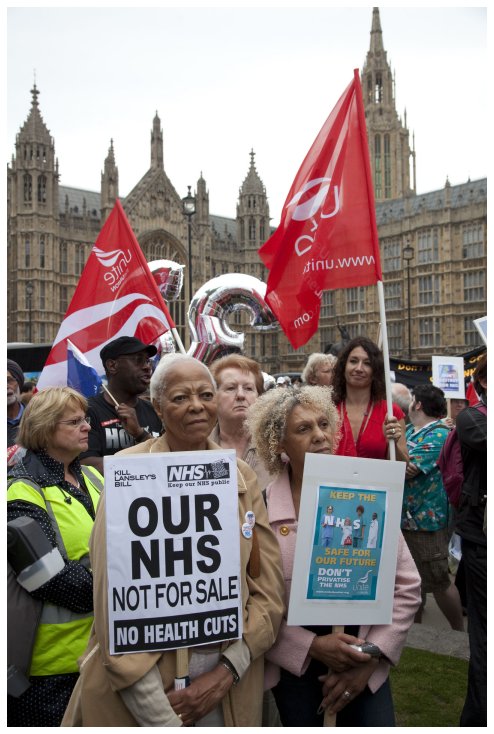
Thousands of health workers, trade unionists and campaigners marched through London on Tuesday, July 5. The protest was called by the Unite union on the occasion of the 63rd birthday of the NHS, amongst many other actions on this day aimed at defending the NHS and upholding the principle that health care is a right.
Led by Unite general secretary Len McCluskey, the march began from Savoy Street, off the Strand in central London, to march past the Department of Health in Whitehall to a rally opposite the Houses of Parliament, where speakers included John Healey, the Labour Shadow Health Secretary.
ShareThis
 In January, the government launched its Health and Social Care
Bill. This Bill has come under intense criticism from Health Service
professionals, health workers and the public. Currently in Committee, it is now
being amended following the report of the “NHS Future Forum”
published on June 13.
In January, the government launched its Health and Social Care
Bill. This Bill has come under intense criticism from Health Service
professionals, health workers and the public. Currently in Committee, it is now
being amended following the report of the “NHS Future Forum”
published on June 13.
The Bill is very complex, so long that even its contents take up 13 pages, and presents an overhaul of the governing arrangements of the NHS. This has not deterred health workers from dissecting and analysing the report from their own perspective, working out its consequences for the future of the Health Service.
 What has been made very apparent is the unashamed
pushing forward of private finance and market forces into the NHS. For example,
in a recent article for The Guardian, Allyson Pollock, professor of
public health research and policy at Queen Mary, University of London, wrote:
“Cameron’s twin strategy is to continue with market competition on
the assumption that it improves cost-efficiency, and raise new forms of funding
by facilitating the introduction of private insurance and patient top-up
fees.” Allyson Pollock, who was previously director of the Centre for
International Public Health Policy at the University of Edinburgh, continued:
“While competition is now proclaimed by government as an unqualified
good, the second prong of the strategy – moving to user charges and
insurance funds – dare not speak its name.”
What has been made very apparent is the unashamed
pushing forward of private finance and market forces into the NHS. For example,
in a recent article for The Guardian, Allyson Pollock, professor of
public health research and policy at Queen Mary, University of London, wrote:
“Cameron’s twin strategy is to continue with market competition on
the assumption that it improves cost-efficiency, and raise new forms of funding
by facilitating the introduction of private insurance and patient top-up
fees.” Allyson Pollock, who was previously director of the Centre for
International Public Health Policy at the University of Edinburgh, continued:
“While competition is now proclaimed by government as an unqualified
good, the second prong of the strategy – moving to user charges and
insurance funds – dare not speak its name.”
 The government’s argument is firstly that the
“cost of healthcare” is inevitably going to rise as the population
ages and the costs of drugs and treatments increase. Secondly, they point to
the real concerns people have over the quality of care. Using phrases like
“sustainability”, “fairness”,
“accountability”, and so on, the answer given is competition,
private forms of financing and a redefinition of the state’s
responsibility to provide health care.
The government’s argument is firstly that the
“cost of healthcare” is inevitably going to rise as the population
ages and the costs of drugs and treatments increase. Secondly, they point to
the real concerns people have over the quality of care. Using phrases like
“sustainability”, “fairness”,
“accountability”, and so on, the answer given is competition,
private forms of financing and a redefinition of the state’s
responsibility to provide health care.
The speed and scale of the proposed changes has been such that the government has found real difficulty in selling them to the public. In order to condition public opinion, it has attempted to present itself as stepping back, listening, and holding a new round of consultation to improve its plans.
 The media has been fully complicit in this
manipulation, presenting the government as making a policy U-turn. It has done
nothing of the sort, other than reword parts of the Bill in a way that is more
open to interpretation, further muddying the waters.
The media has been fully complicit in this
manipulation, presenting the government as making a policy U-turn. It has done
nothing of the sort, other than reword parts of the Bill in a way that is more
open to interpretation, further muddying the waters.
Allyson Pollock is clear on the role of the government’s consultation exercise: “The political horse-trading is over: the Future Forum has given the green light to the Government’s fundamental reforms of the NHS.”
One of the main points raised by the Future Forum was that “the place of competition should be as a tool for supporting choice, promoting integration and improving quality. It should never be pursued as an end in itself.”
 This point is raised in the context of the how the reforms of
the NHS have been presented. The story goes that the government, motivated by
its ideological commitment to the free market, plans to enact a set of sweeping
changes. Met by criticism, it holds its consultation. Its so-called panel of
independent experts say that competition should not be an end in itself. The
government amends its Bill to show that its aim is “to make life better
for patients”; it just so happens that competition is the most efficient
way to achieve this.
This point is raised in the context of the how the reforms of
the NHS have been presented. The story goes that the government, motivated by
its ideological commitment to the free market, plans to enact a set of sweeping
changes. Met by criticism, it holds its consultation. Its so-called panel of
independent experts say that competition should not be an end in itself. The
government amends its Bill to show that its aim is “to make life better
for patients”; it just so happens that competition is the most efficient
way to achieve this.
Whose interests is this Bill serving? The monopolies demand that everything pays them tribute. If the NHS or any social programme is not a source of paying the rich, it is declared to be unsustainable. However, it has to be said that it is the plundering of social programmes by the big banks and monopolies that is unsustainable. Rather than deal with this real drain on resources, the government plans to rearrange everything to increase the power of the monopolies to direct the system in their own interests with the aim of reaping even greater rewards, and to put the government, social programmes and public services to this end.
It is this that is the end in itself, no matter how much they try to dress it up with consultation exercises. It is this whole agenda and ideology that has to be opposed. The amendments to Lansley’s Bill must be analysed from this perspective.
The alternative begins with emphatically rejecting the notion that the NHS can be somehow “unsustainable”. The alternative is to look at the issue of funding from a human-centred perspective. The whole purpose of the economy should be to provide for human beings, and this necessarily involves ensuring that people’s health care is provided for and that the conditions are there to live a healthy life. This is the alternative direction to safeguard the future of the NHS.
To elaborate the content of this alternative, rather than “future forums” of disconnected experts, the need is to develop true forums of health workers for safeguarding the future of the Health Service.
ShareThis

1.7 million people on Friday, July 1, demonstrating in Tripoli to
demand an end to the NATO bombings. Photo: Mohanned Magam
The illegal war against the Libyan Jamahiriya, which has been waged by the British government and its allies for some four months, has intensified in recent weeks. There have been increased NATO attacks, the actions of the International Criminal Court, further diplomatic recognition of the so-called National Transitional Council and further breaches of the UN imposed arms embargo, most notably by France, which openly admitted supplying the rebels with arms. In short, Britain, France, the US and their allies have continued with their criminal actions that are designed to bring about regime change in Libya. However, although the NATO-rebel alliance utilising the military capabilities of some of the most powerful countries in the world clearly has overwhelming military superiority, such efforts have so far proved unsuccessful. The government in Libya is still in office and at the beginning of July Muammar Gaddafi defiantly addressed tens of thousands of patriotic Libyans in Tripoli and called on the governments of the NATO members to end their war crimes and to institute direct participatory democracy in their countries just as Libya had done.
At the same time, there have been renewed efforts to end the conflict particularly by the African Union. The AU, which has largely been sidelined from the conflict by the big powers, has recently issued two communiqués reiterating that military conflict cannot resolve the crisis in Libya. The AU calls for an end to NATO bombing and for an immediate cessation of hostilities so that humanitarian assistance can be given and so that negotiation and other measures outlined in the AU Roadmap can be implemented. The AU Roadmap calls for all the “Libyan Parties” to begin a “national dialogue for a comprehensive ceasefire” and for “national reconciliation”, as well as for various “transitional arrangements” which would include an interim government and internationally supervised elections. Most importantly the AU has stressed the need for “Africa-owned and Africa-led” solutions to the problems confronting Libya. The government of the Libyan Jamahiriya has welcomed the intervention of the AU and has accepted the Roadmap, while Muammar Gaddafi has agreed not to take part in any negotiations. The National Transitional Council has however rejected the AU proposals on the basis that any negotiation could only take place after the resignation of Muammar Gaddafi. It cannot be considered coincidental that Foreign Secretary William Hague had a very similar approach to the AU proposals. He continued to state that the British government was committed to the ousting of Gaddafi and his family, which has become a euphemism for continued NATO bombing and intervention in the Libya.
The British government has the dubious distinction of being one of the leading war criminals in regard to Libya, along with the US, France and their NATO allies. It is waging war against a country which has had the highest standard of living in Africa, an impressive distribution of the country’s wealth and its own unique political system. It is however also a country that has large supplies of oil and gas and which has attempted to assert its independence and refused to be part of enslaving political or military arrangements established by the US, Britain and their allies. In order to establish a new proxy state in North Africa, and taking advantage of the popular rebellions in the region, Britain and the other big powers encouraged an uprising in Libya and then provided military support and intervention for it under the auspices of the UN and NATO. The justification for such intervention, the alleged crimes against civilians committed by the Libyan government, has now been discounted even by the monopoly media and such organisations as Amnesty International, while the recent arrest warrant issued by the discredited International Criminal Court for Muammar Gaddafi in connection for such alleged crimes has been rejected by the African Union, which has told its members to disregard it.
The NATO-led war against Libya is now being condemned and rejected by the vast majority of progressive people in the world and by their governments. The demand of the warmongering government of Britain and its allies for regime change is similarly condemned and rejected. The people of Libya must be allowed to decide their own affairs without any external interference. In Britain, WWIE calls on the working class and people to intensify their efforts to establish an anti-war government in this country which would reject out of hand any such criminal intervention.
ShareThis