
| Year 2006 No. 31, April 14, 2006 | ARCHIVE | HOME | JBBOOKS | SUBSCRIBE |
|---|
Workers' Daily Internet Edition: Article Index :
Blair and Straw Elaborate Britain’s Retrogressive and Reactionary Foreign Policy
Anniversaries of the Killings of Tom Hurndall and Rachel Corrie
The Fascist Prison Sentence Passed on Flight Lieutenant Kendall-Smith
Daily On Line Newspaper of the
Revolutionary Communist Party of Britain (Marxist-Leninist)
170, Wandsworth Road, London, SW8 2LA.
Phone: (Local Rate from outside London 0845 644 1979) 020 7627 0599
Web Site:
http://www.rcpbml.org.uk
e-mail:
office@rcpbml.org.uk
Subscription Rates (Cheques made payable to RCPB(ML)):
Workers' Weekly Printed Edition:
4 issues - £2.95, 6 months - £18.95 for 26 issues, Yearly -
£33.95 (including postage)
Workers' Daily Internet Edition sent by e-mail daily (Text
e-mail):
1 issue free, 6 months £5, Yearly £10
During the last few weeks, Prime Minister Tony Blair and Foreign Secretary Jack Straw have both made major speeches about Britain’s foreign policy. The Prime Minister announced that he would outline the key features of New Labour’s foreign policy in three major speeches but only two have been delivered to date. The final speech on the need for the reform of international institutions will be delivered in the US. These speeches also coincided with the launch on March 28 of the government’s White Paper, Active Diplomacy for a Changing World: The UK's International Priorities.
The key themes of the first two speeches were that Britain’s foreign policy is based on the defence of values, which the Prime Minister referred to as “global values”, rather than narrow national interest. Second, that these “global values” should form the basis of “a global alliance”, based on a “common global policy”; and third, that the defence of these values requires a foreign policy of “engagement not isolation, one that is active not reactive”. In short, these speeches presented an updating and further elaboration of Blair’s “doctrine of international community”, a defence and justification for global intervention and interference by Britain and the other big powers, that was first presented in a speech made in Chicago in 1999.
For Blair, the “doctrine of international community” now presents a problem and its solutions. The problem, a “global ideology” which must be defeated at all costs, is defined as what he referred to as “radical Islam” or “the extremist view of Islam”. On the other hand, US imperialism, the military invasions and sabre-rattling of Britain and the other big powers, and globalisation are said to be the solutions. It is this “clash between extremism and progress”, Blair argues, that is evident in Iraq, Iran, Palestine and elsewhere. According to Blair, there is a global “battle of values and progress” that must be won, in Britain as well as throughout the world.
The Foreign Secretary made his major pronouncements on foreign policy in Blackburn during the visit of the US Secretary of State. His speech was entitled “Values we promote at home, guide us abroad”. Jack Straw began his speech by attempting to present a contrast between foreign policy in the days of empire, in which he admitted foreign policy meant pursuing the very narrow interests of British imperialism, and foreign policy today, where he suggested that national interests were best advanced by “building a community of nations in which people can share in common values”. Not for a moment did Jack Straw consider the possibility that these “global values” – the free market, the rule of law, representative democracy, a particularly narrow conception of human rights and “a helping hand for the poorest” – were in fact steeped in Eurocentrism. They are not unlike the values championed by those who claimed to have taken up the “white man’s burden”, and a “civilising mission” throughout the world in the 19th century. According to Jack Straw, it is these values that are the basis for a successful society and which guide the government at home, therefore they must also be promoted abroad, as part of “a progressive, internationalist agenda”.
It is on the basis of such logic that Blair and Straw justify what the Prime Minster now openly refers to as the invasions of Iraq and Afghanistan, as well as military action in Africa and the Balkans. Intervention and interference in Iran, Palestine, Africa and elsewhere is presented as “activism”, the export of Britain’s economic and political system and all the values of neo-liberal globalisation are seen as one of the main aims of foreign policy, directed particularly at the Middles East, Africa and Asia.
The Prime Minister and Foreign Secretary make a big song and dance about these values. But although they argue about the need for Britain to lead by example in regard to international law, human rights and democracy exactly the opposite has been the case both today and in the past, whether in regard to the breaking of UN sanctions in relation to Sierra Leone, or the invasions of Iraq and Yugoslavia. The government’s policies in Britain, especially the so-called anti-terrorism laws, are notorious for breaching human rights legislation, while the people of Britain are still denied the right to determine their own destiny whether in regard to politics or the direction of the economy.
The fact remains that Britain’s foreign policy does not reflect the interests of the people of Britain but rather those of the big monopolies and financial institutions. It is a foreign policy based solidly on the reactionary principle that might is right, one that brazenly threatens the sovereignty of other countries, and one that is creating an ever more unstable and dangerous situation in the world. This foreign policy must be defeated by the working class and people themselves determining an independent and anti-war foreign policy. This is a task to be taken up for solution right now.
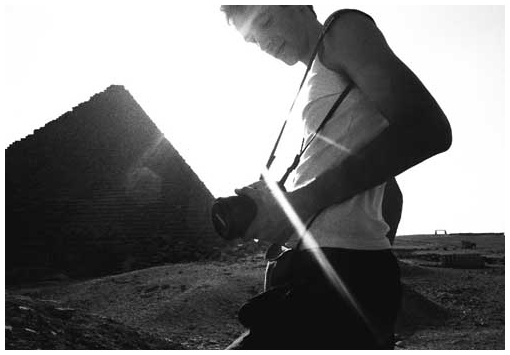
On April 11, 2003, a young British photographer and student from north London, a member of the International Solidarity Movement, was shot in the head by an Israeli Defence Force (IDF) sniper and suffered irreversible brain damage, dying from his injuries nine months later after lying in a coma. Tom Hurndall was 22 years old.
Speaking in 2003, Tom’s sister Sophie explained:
 “Tom was himself shot as he was trying to
help a group of children. Waiting at the end of a street in Rafah, he saw
machine gun fire being directed at a mound of earth on which about twenty
children were playing. Most of the children fled but three young children were
too scared to move, two girls and a boy aged between 5 and 8. Tom walked
forward and picked up the little boy, named Salem Baroum. Having brought Salem
back to safety he returned for the second child. Tom was shot in the head by a
single sniper bullet as he leant forward to pick up the little girl.
“Tom was himself shot as he was trying to
help a group of children. Waiting at the end of a street in Rafah, he saw
machine gun fire being directed at a mound of earth on which about twenty
children were playing. Most of the children fled but three young children were
too scared to move, two girls and a boy aged between 5 and 8. Tom walked
forward and picked up the little boy, named Salem Baroum. Having brought Salem
back to safety he returned for the second child. Tom was shot in the head by a
single sniper bullet as he leant forward to pick up the little girl.
“The IDF released reports that Tom was armed, clothed in army camouflage and firing at the soldiers when he was shot. These reports have been reflected in media around the world, especially in Israel. These reports are not true. Many of you will have seen photographs of Tom in his fluorescent orange activist’s vest. We have photographs of Tom immediately before and after the shooting – from several independent sources. There were over ten eyewitness reports of Tom’s shooting from internationals, including the accounts of journalists – all of which support the fact that Tom was fired at with no justification and that there was no crossfire. But what is extraordinary is that to this day, not a single one of these witnesses has been questioned by the IDF or the Israeli authorities. How can any credible inquiry be conducted without questioning them? Indeed some of these witnesses have since been arrested and detained or unlawfully deported.”
And in the words of his mother, Jocelyn Hurndall:
“He was a young man of great conviction, willing to stand up and, as Tom wrote, ‘to take it one step further’. ... His journals are a moving portrayal of a young man’s courageous journey, a search for truth. He was acutely aware of the dangers but possessed, and this defined Tom, an even stronger desire to see the other side of the debate for himself. He wanted to remain discriminating and sceptical about all that he heard. Through his photography and writing, as Tom wrote, he then wished to ‘make a difference’. The beauty of his writing lies in the fact that it portrays openly the rationale and feelings of an intelligent young man towards the situation in the Middle East which were unencumbered by the constraints of political allegiances. He was consciously following a road, separating out the propaganda and emotional responses from the facts in order to come to his own considered conclusions. This poignant process shows beautifully where and how he was trying to go, where he would have gone. You get a powerful sense of his belief in the importance of being closely in touch with more than just accurate facts. He placed a high value on the way others were feeling when thinking about the effectiveness of war reporting. It was this, the need to be in touch with the way people were feeling, that led him to believe that there was another way of dealing with the war in Iraq.”
Tom’s family has been struggling for justice throughout the past three years. Recently a jury at St Pancras Coroner’s Court in London ruled on April 10 that Tom Hurndall had been “shot intentionally with the intention of killing him”, and expressed “its dismay with the lack of cooperation from the Israeli authorities”. Under the Geneva Convention, the murder of a civilian by a soldier is a war crime, and therefore can be tried in British courts regardless of where the death took place. Previously, the killing had been regarded as accidental. The soldier concerned had been convicted of manslaughter in 2005 and jailed for eight years.
Tom’s family has demanded the British government takes action against the man’s commanding officers, stating their conviction that blame goes higher up. A spokesman for the Foreign Office said on April 11 that he hoped the Israelis accepted the family’s claim for compensation, but would not comment on their further demands. Jocelyn Hurndall said: “We are astonished to this day that Tony Blair has never publicly condemned the shooting of Tom. It is necessary for the Israelis to hear condemnation from him.”
 On March 16, 2003, a young American woman
from Olympia, Washington, another International Solidarity Movement volunteer,
was crushed by an Israeli bulldozer when trying to prevent the demolition of a
Palestinian home in Rafah, in the Gaza strip. Rachel Corrie was 23 years old.
On March 16, 2003, a young American woman
from Olympia, Washington, another International Solidarity Movement volunteer,
was crushed by an Israeli bulldozer when trying to prevent the demolition of a
Palestinian home in Rafah, in the Gaza strip. Rachel Corrie was 23 years old.
International human rights organisations and the United Nations have consistently condemned such demolitions as Rachel was trying to prevent as a clear violation of international humanitarian law.
Rachel’s cousin Elizabeth Corrie explained:
“[A]n Israeli soldier and his commander ran over Rachel with a nine-ton Caterpillar bulldozer while she stood – unarmed, clearly visible in her orange fluorescent jacket – protecting a Palestinian home slated for demolition by the Israeli army. The death of Rachel Corrie, and the response that her case has – and has not – received, reveal several disturbing, indeed immoral and criminal, truths.
“First, Rachel died while attempting to prevent the demolition of a home, a common practice of the Israeli Army’s collective punishment that has left more than 12,000 Palestinians homeless since the beginning of the second uprising in September 2000. This practice violates international law, including the Fourth Geneva Convention.
“Second, Rachel was run over by a Caterpillar [D9] bulldozer, manufactured in the United States and sent to Israel as part of the regular U.S. aid package to Israel, which amounts to $3 billion to $4 billion annually, all of it from U.S. taxpayers. The use of Caterpillar bulldozers to destroy civilian homes, not to mention to run over unarmed human rights activists, violates U.S. law, including the U.S. Arms Export Control Act, which prohibits the use of military aid against civilians.
“Third, the self-acquittal of the Israeli army for Rachel’s death and the resistance of the state of Israel to an independent investigation into this case reveals both the Sharon administration’s unwillingness to take responsibility for the death of a U.S. citizen and the Bush administration’s cowardice in allowing another nation to attack U.S. citizens with impunity.”
On March 15 of last year, the Centre for Constitutional Rights (CCR) and partnering law firms filed a federal lawsuit against Illinois-based Caterpillar, Inc. on behalf of the parents of Rachel Corrie. The suit alleges that Caterpillar violated international and state law by providing specially designed bulldozers to the IDF that it knew would be used to demolish homes and endanger civilians.
The Corries also filed a tort claim on the same day in Israel against the State of Israel, the Israeli Defence Ministry and the IDF for their role in the death of their daughter. They are represented by Advocate Hussein Abu Hussein.
Rachel’s mother, Cindy Corrie, was reported at the time as saying, “As we approach the two-year anniversary of Rachel’s killing, my family and I are still searching for justice. The brutal death of my daughter should never have happened. We believe Caterpillar and the IDF must be held accountable for their role in the attack on my daughter Rachel.”
Over the past three years, Rachel Corrie and Tom Hurndall have been symbols of resistance and a source of inspiration to all democratic and peace loving people. Their heroic acts represent the young people of Britain and America and their alternative vision of the role those countries in the world. At the same time, they have come to embody the youth taking control of the future. Rachel summed this up in the moving quote from the last paragraph of her last email, where she said to her father, “Let me know if you have any ideas about what I should do with the rest of my life.”
Uphold the spirit of Tom Hurndall and Rachel Corrie!
WDIE vigorously condemns the prison sentence of eight months passed on Flight Lieutenant Malcolm Kendall-Smith for refusing to serve in Basra. The sentence, and the conduct of the court martial, demonstrated not only a violation of the right to conscience, but flagrantly overturn the principles established at the Nuremberg Tribunals. These principles, which have become so widely known and respected, established that for a combatant to claim that they were just following orders when committing a war crime is no defence.
Flight Lieutenant Kendall-Smith upheld, justly, that the war against Iraq was illegal, and that therefore he was under no obligation under military and international law to obey “lawful orders”. In fact, his obligation was to take the opposite course and follow his conscience. This is also a well-established principle, one that apparently Tony Blair himself subscribes to. The proceedings of the court martial, in which defence witnesses were not allowed to be called, and its content are even more outrageous given that the weight of democratic opinion demands first and foremost that crimes committed at Abu Ghraib and elsewhere are still crimes not ameliorated by the defence that the soldier was obeying superior orders.
As is the case with the families of troops who have been killed in Iraq who are campaigning for an end to the illegal war and occupation, the issue is one of justice. Occupation is not liberation, and those responsible for crimes of aggression and crimes against peace must be held accountable. The court martial of Flight Lieutenant Kendall-Smith has turned this on its head with fascist logic.
The court martial, following the government’s lead, acted as though international law and the principles established by humanity’s immense sacrifice, are something which only lesser countries must take account of and apply. The court particularly poured scorn on the fact that the accused was making himself a “martyr”. But justice is justice and crimes are crimes. The movement will not rest until the illegal occupation of Iraq is ended. The stand of Malcolm Kendall-Smith provides a further inspiration to step up the work to ensure that justice prevails.
May 6 is an international day of action against an attack on Iran. Lunchtime protests will take place at 2.00 pm in towns and cities across the country. The London protest will assemble at 1pm in the Peace Garden in Tavistock Square, WC1H 9XX . Nearest tubes Russell Square and Euston.